Begin with the site condition.

A useful recommendation starts with how the surface behaves, what must move across it and how the system will be handled.

Send an application brief

Temporary access & ground protection

Routes and work pads selected around vehicles, ground conditions, traffic patterns and reuse cycles.

Temporary access & ground protection
01

Construction mud & soft-ground access

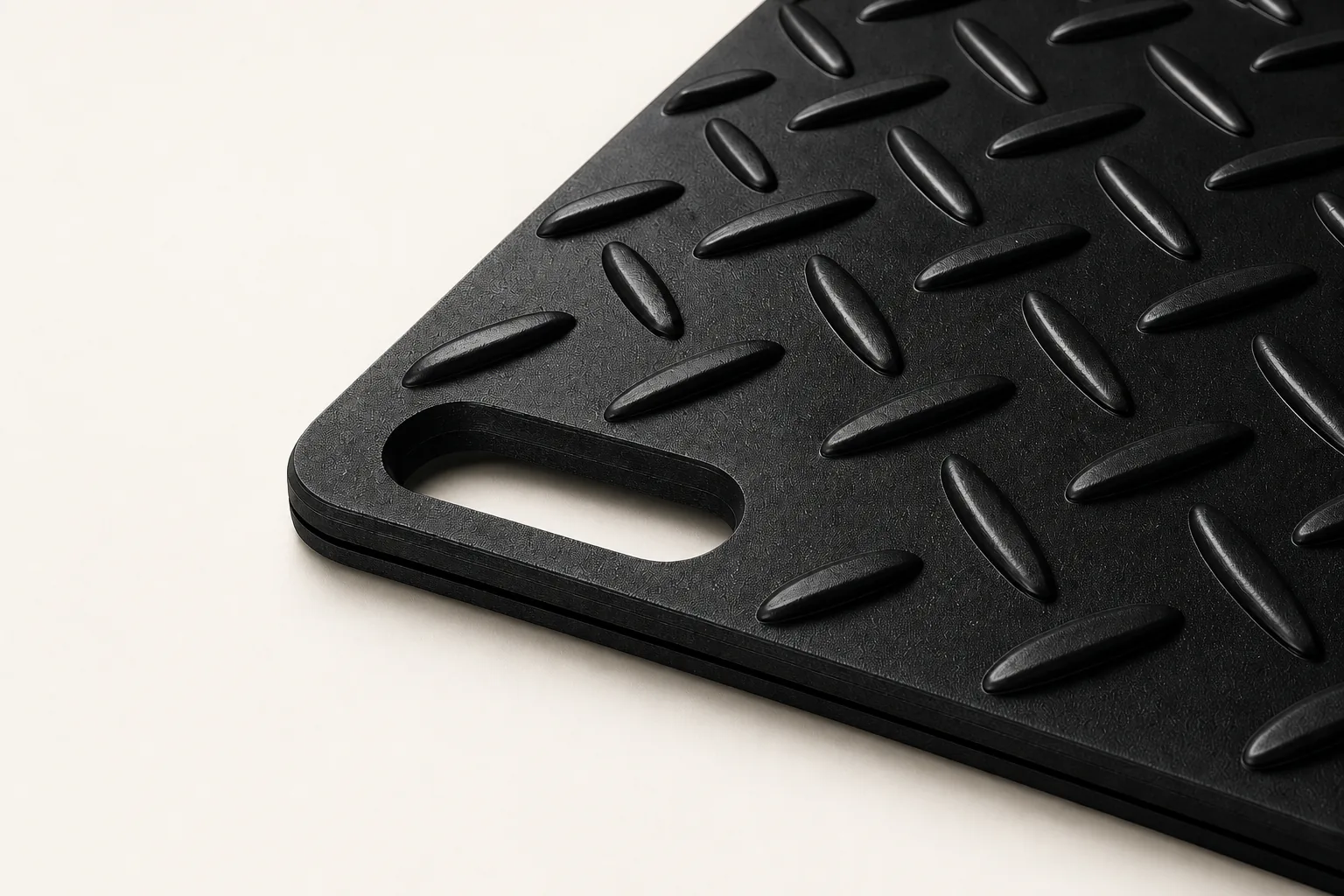
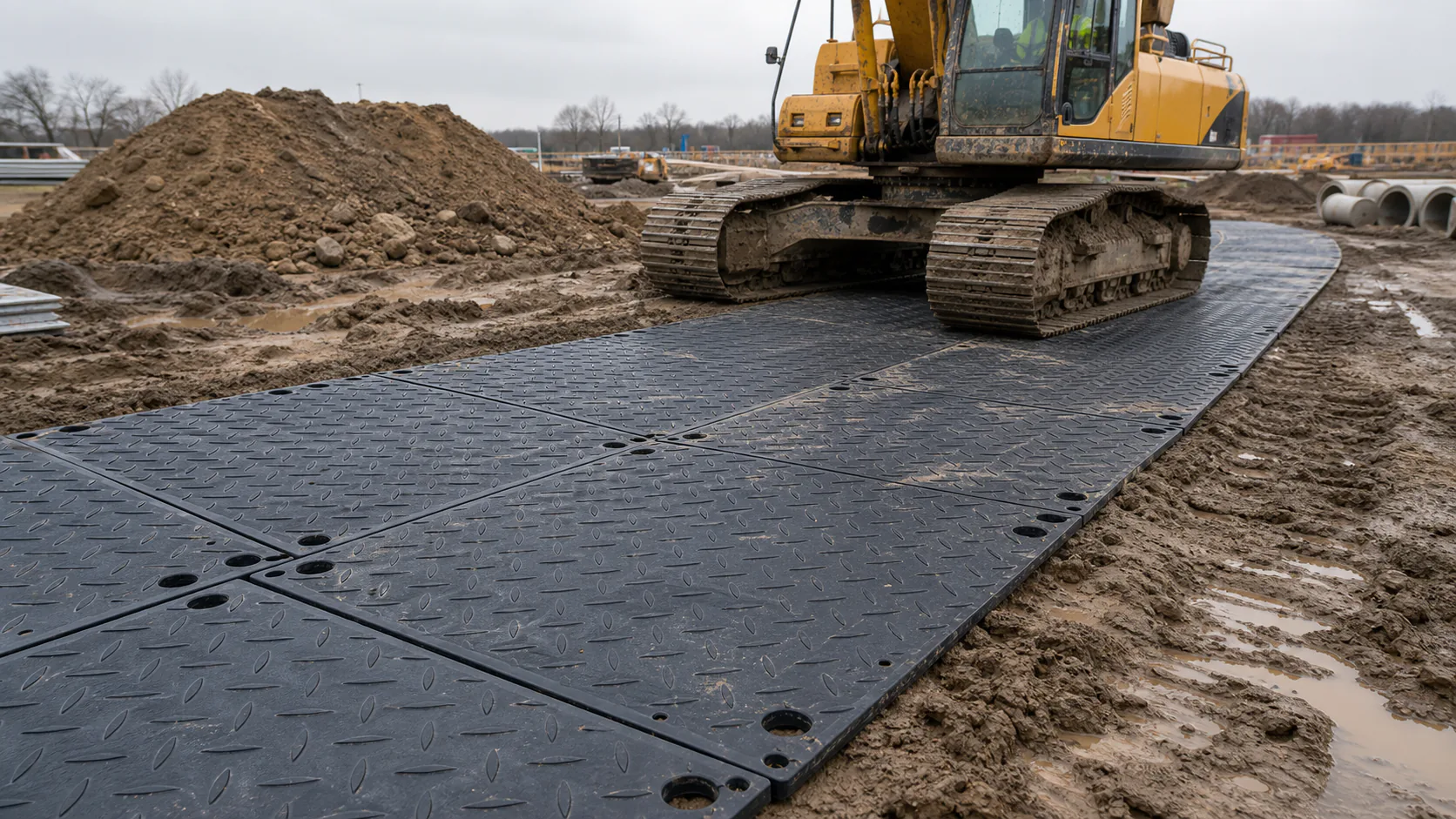
Interlocking mats create a recoverable route for excavators, trucks and site crews where exposed ground would rut or become muddy.

Product starting point Ground Protection Mats; tread, thickness and connectors selected for the vehicle and ground.

Why it helps

  • Helps spread contact and reduce rutting or mud transfer.
  • Can be moved and reused as the site route changes.

Confirm before selection

  • Confirm axle load, soil bearing, turning and braking.
  • Define route width, joint layout, maintenance and installation period.
02

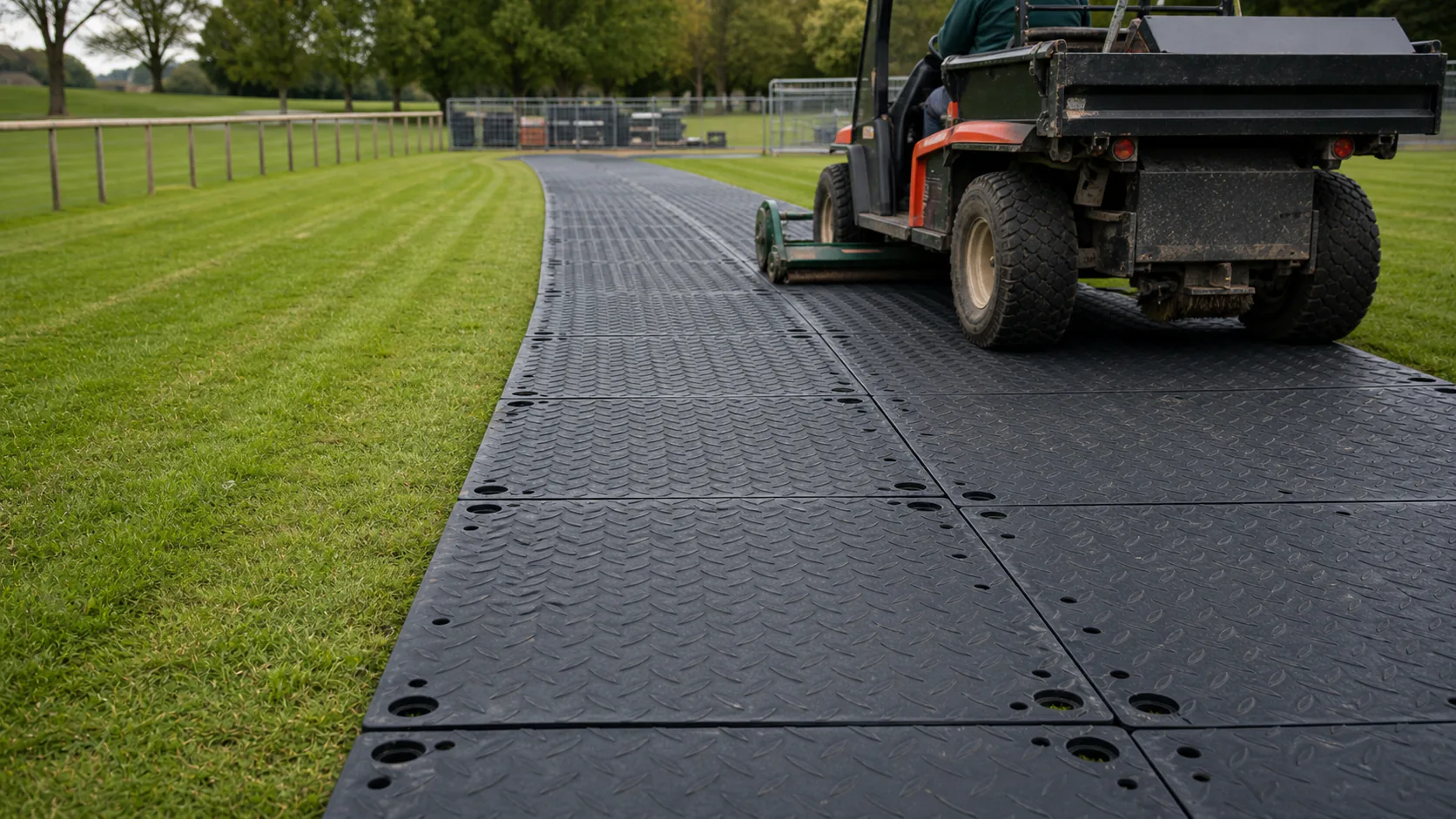
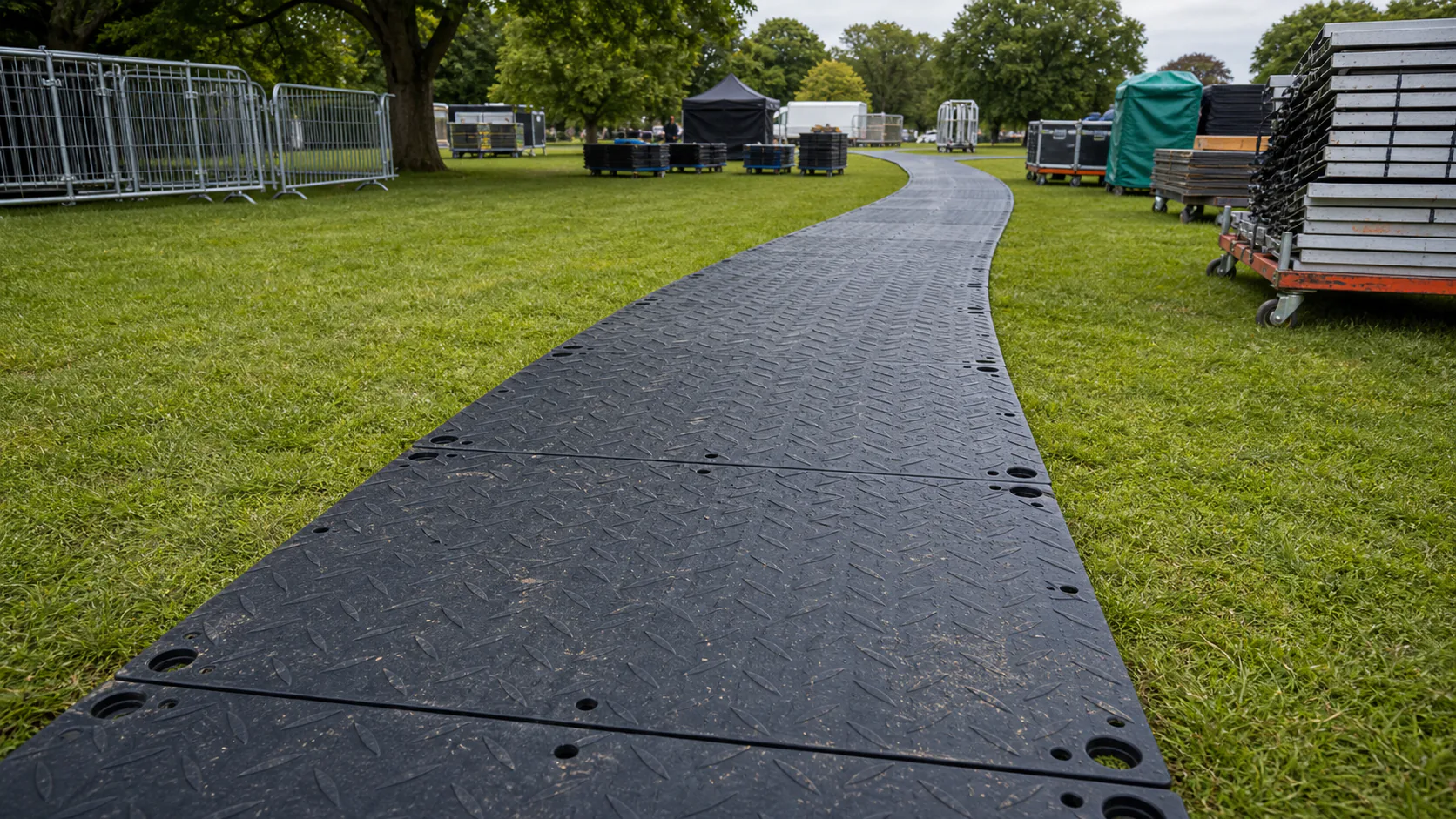
Turf protection & outdoor events

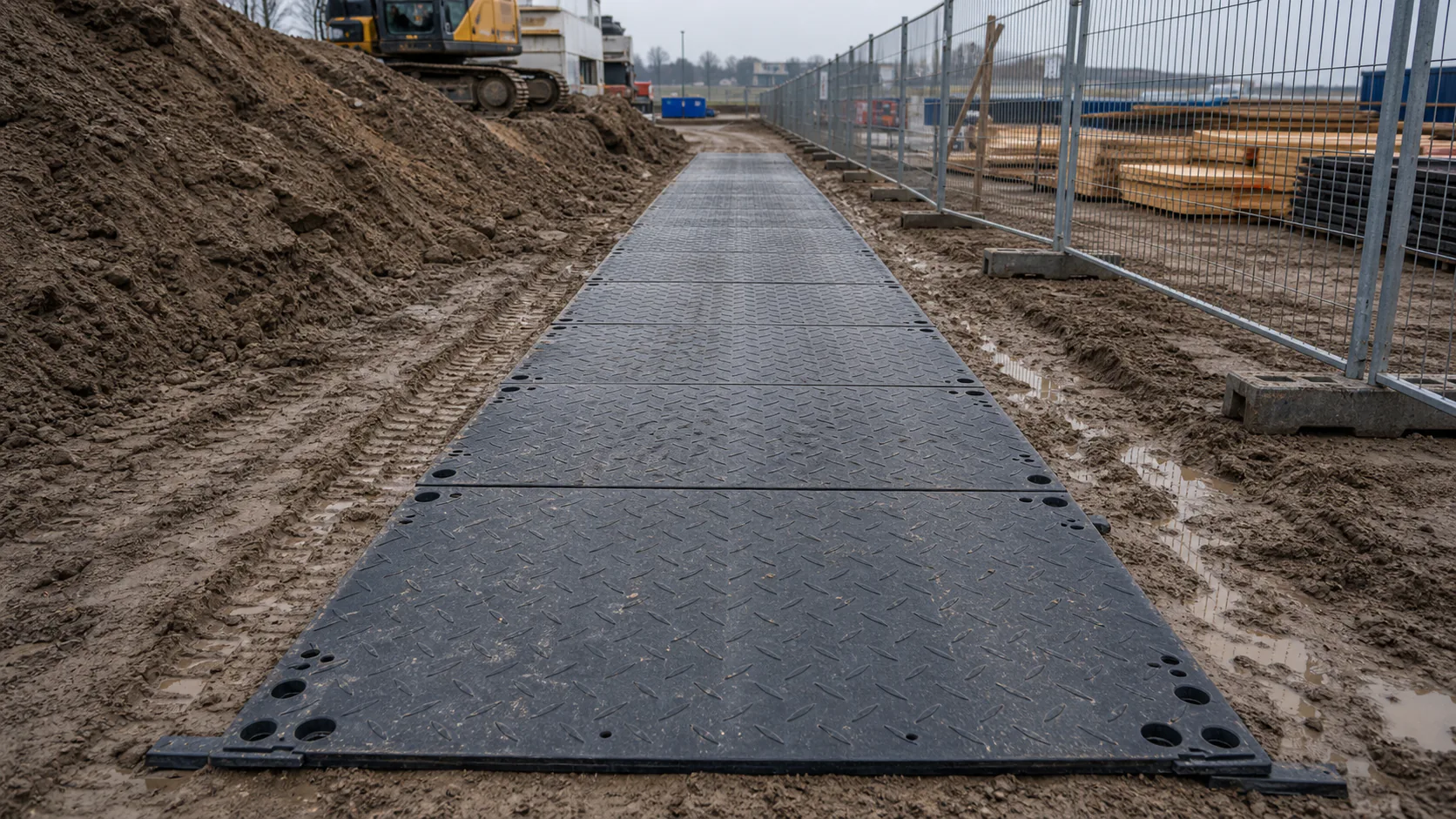
Temporary walkways, light-equipment routes and staging pads help keep traffic off directly exposed lawns.

Product starting point Ground Protection Mats with a surface and joint pattern suited to pedestrian and light-equipment use.

Why it helps

  • Protects sensitive turf from concentrated traffic.
  • Modular panels can be removed after the event.

Confirm before selection

  • Check wet ground, slopes, wheel loads and dwell time.
  • Inspect seams and edges to manage trip and movement risks.
03

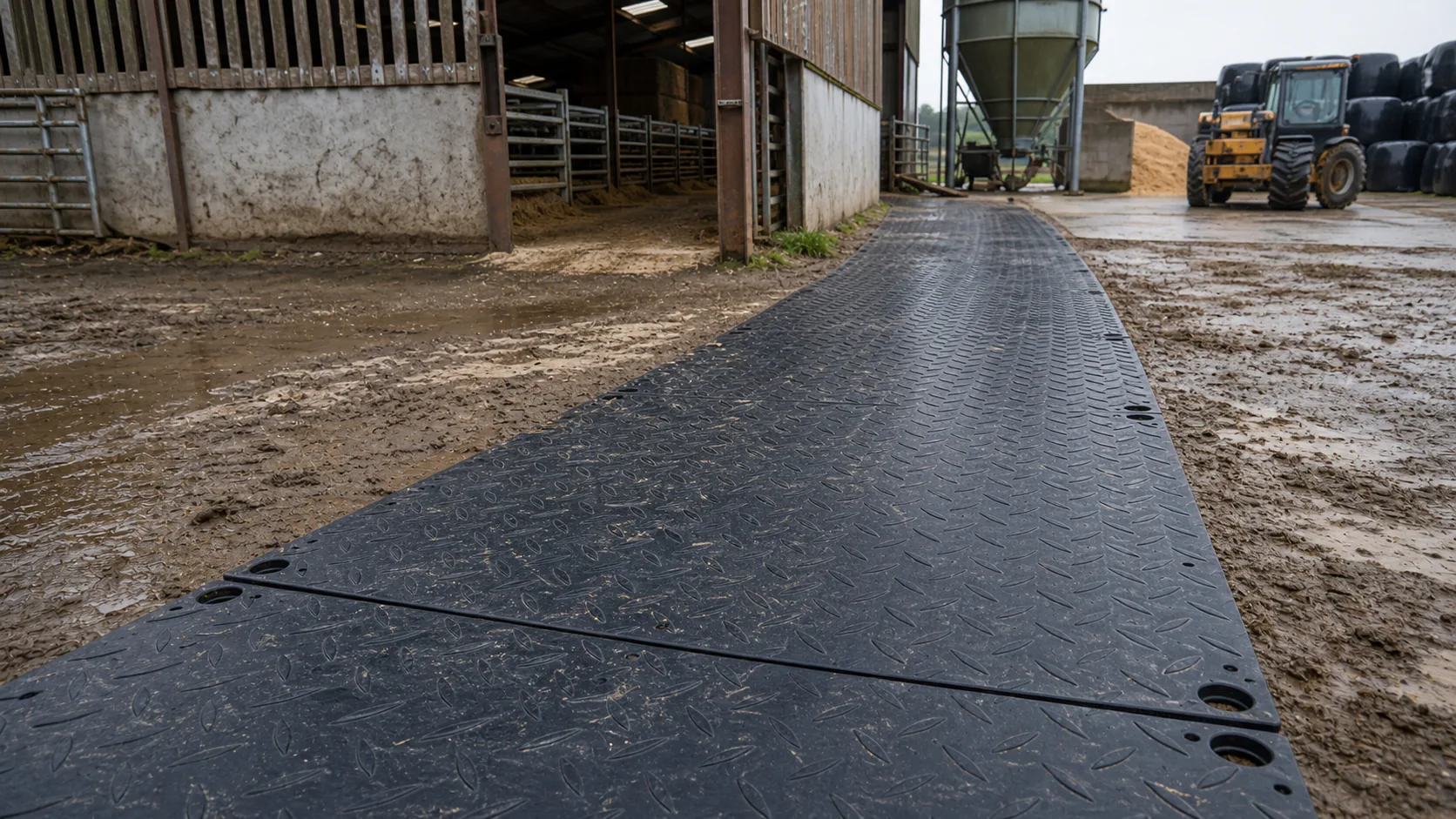
Farm, barn & feed access

Reusable routes support feed delivery, barn approaches and agricultural machinery across seasonally soft or dirty ground.

Product starting point Ground Protection Mats selected for tractor geometry, route width and cleaning needs.

Why it helps

  • Creates a defined approach through mud-prone areas.
  • Supports cleaning and seasonal redeployment.

Confirm before selection

  • Confirm tractor axle loads, sharp turns and repeated traffic.
  • Review manure, water, cleaning chemicals and surface contamination.
04

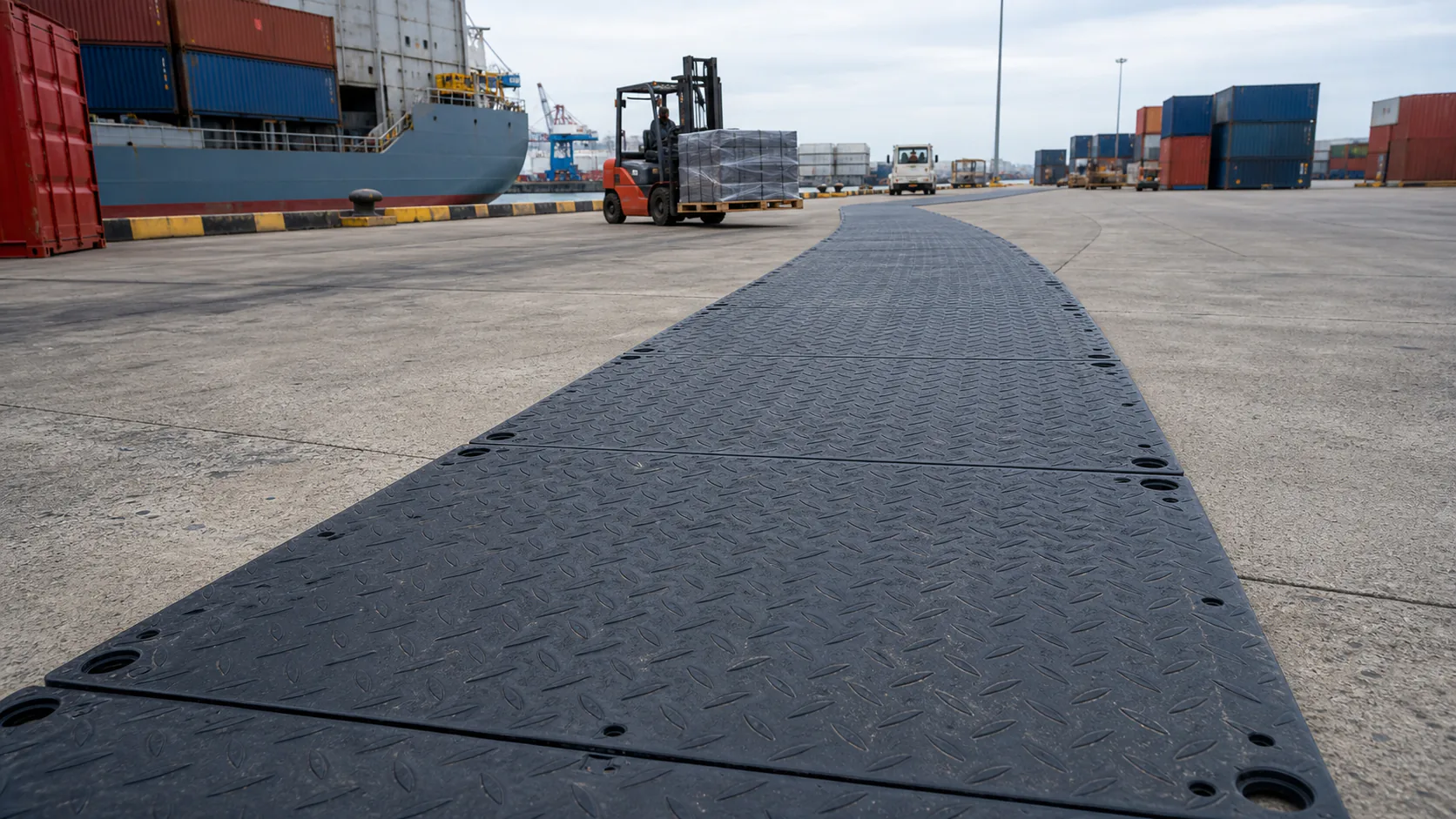
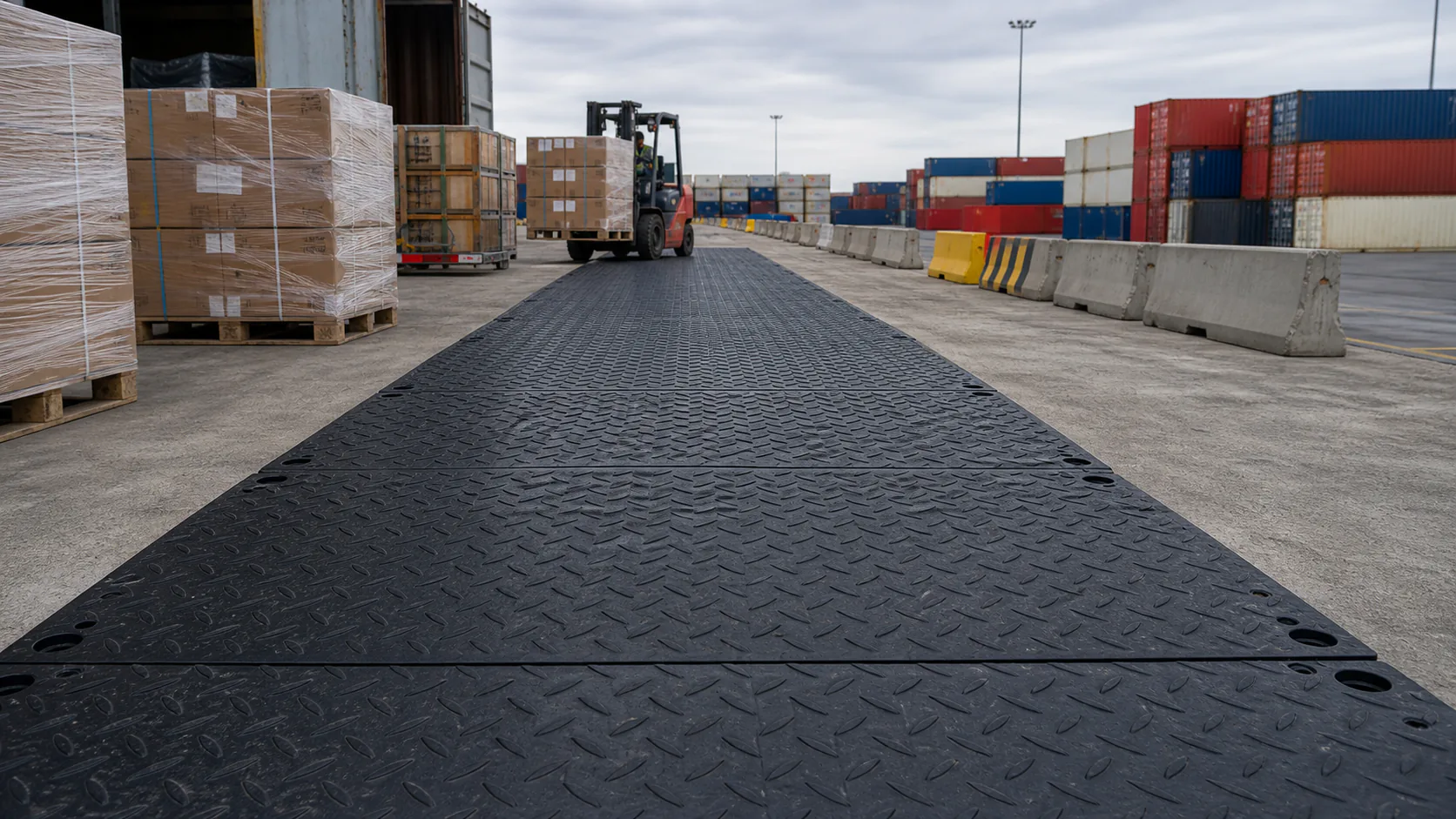
Port aprons & container yards

Mats can define temporary travel lines and loading work areas on port aprons and container-yard surfaces.

Product starting point Ground Protection Mats or custom sheets selected for the actual vehicle and surface.

Why it helps

  • Provides a removable work surface for temporary layouts.
  • Helps protect the underlying apron in suitable operations.

Confirm before selection

  • Forklifts and container equipment can create high point loads; assess them separately.
  • Confirm port rules, turning, braking, drainage and edge restraint.
05

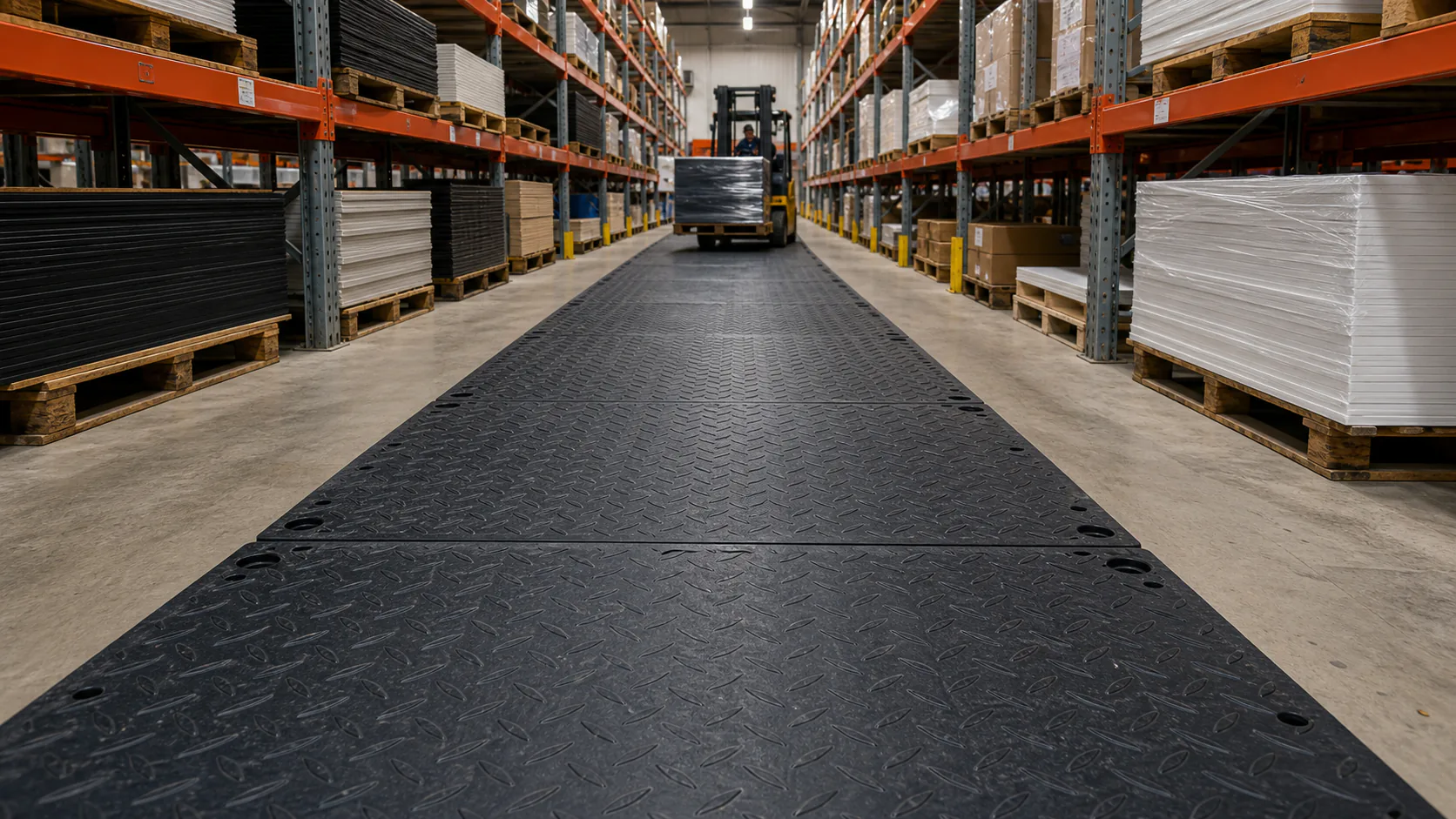
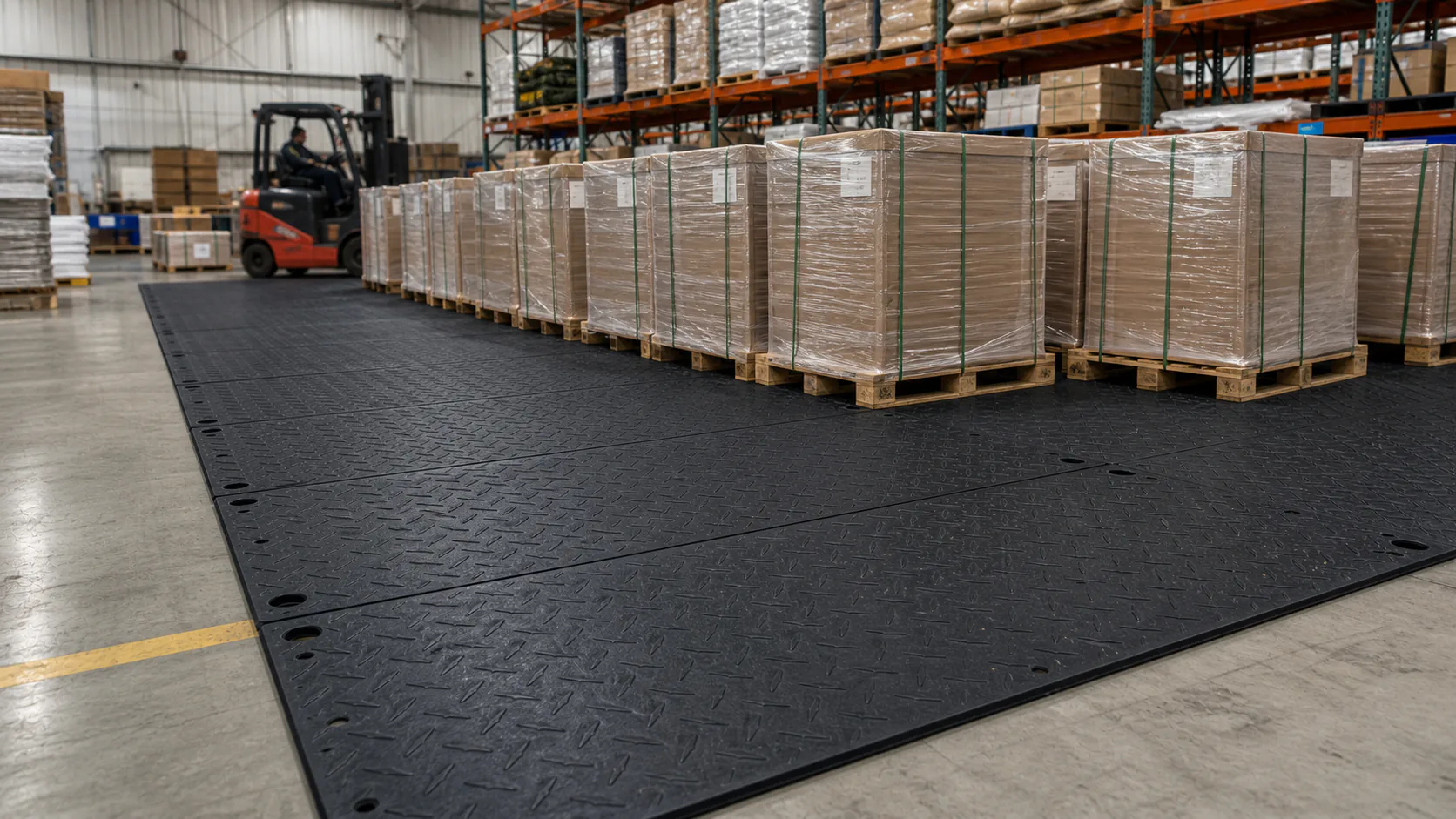
Warehouse forklifts & pallet staging

Custom panels can protect floors along temporary forklift routes and under pallet staging areas.

Product starting point Engineering Plastic Sheets or Ground Protection Mats with flush, controlled joints.

Why it helps

  • Separates temporary traffic or staging from the finished floor.
  • Panels can be cut around defined work zones.

Confirm before selection

  • Confirm wheel hardness, point load, pallet feet and floor flatness.
  • Keep seams level and outside critical turning paths where possible.
06

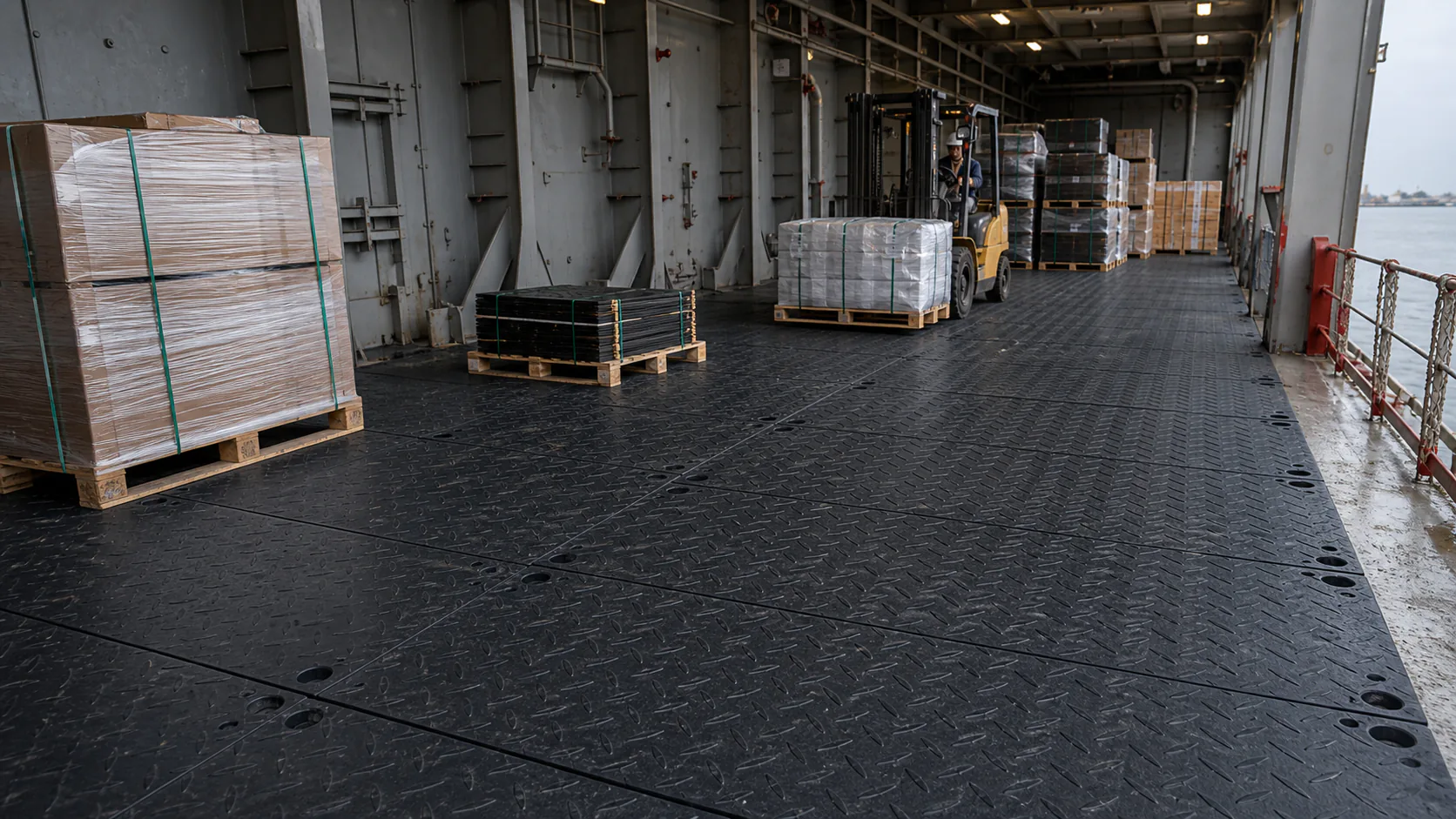
Ship deck & cargo protection

Polymer sheets can create removable protection beneath cargo or along selected handling areas on a vessel deck.

Product starting point Engineering Plastic Sheets cut and drilled to the approved deck layout.

Why it helps

  • Water and corrosion-resistant sheet surface.
  • Custom shapes can fit cargo and access zones.

Confirm before selection

  • Obtain vessel and operator approval for the installation.
  • Confirm cargo loads, wet slip conditions, drainage and fastening.

Equipment support

Outrigger and stabilizer pads selected from reaction force, footprint, supporting ground and equipment instructions.

Equipment support
07

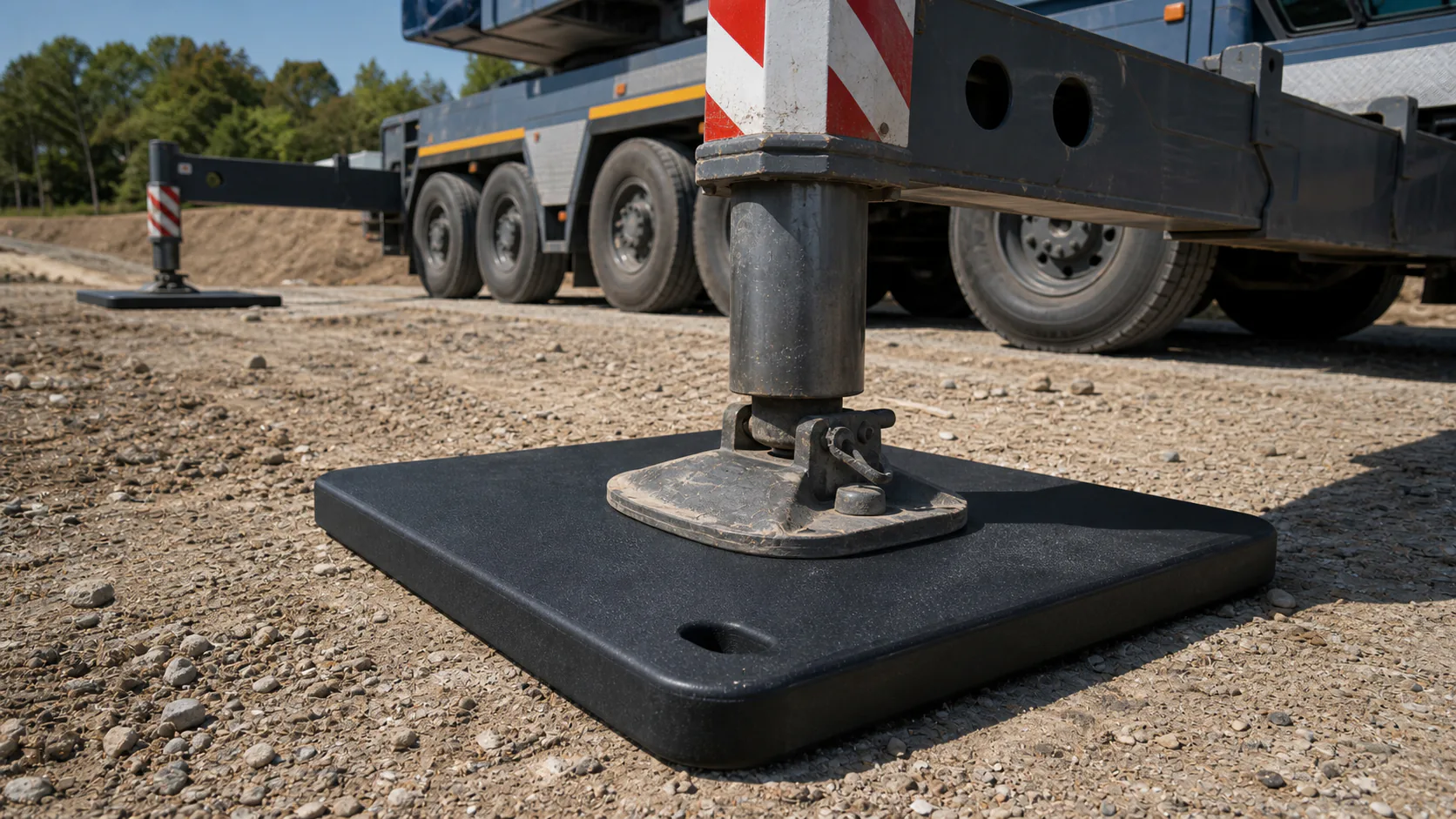
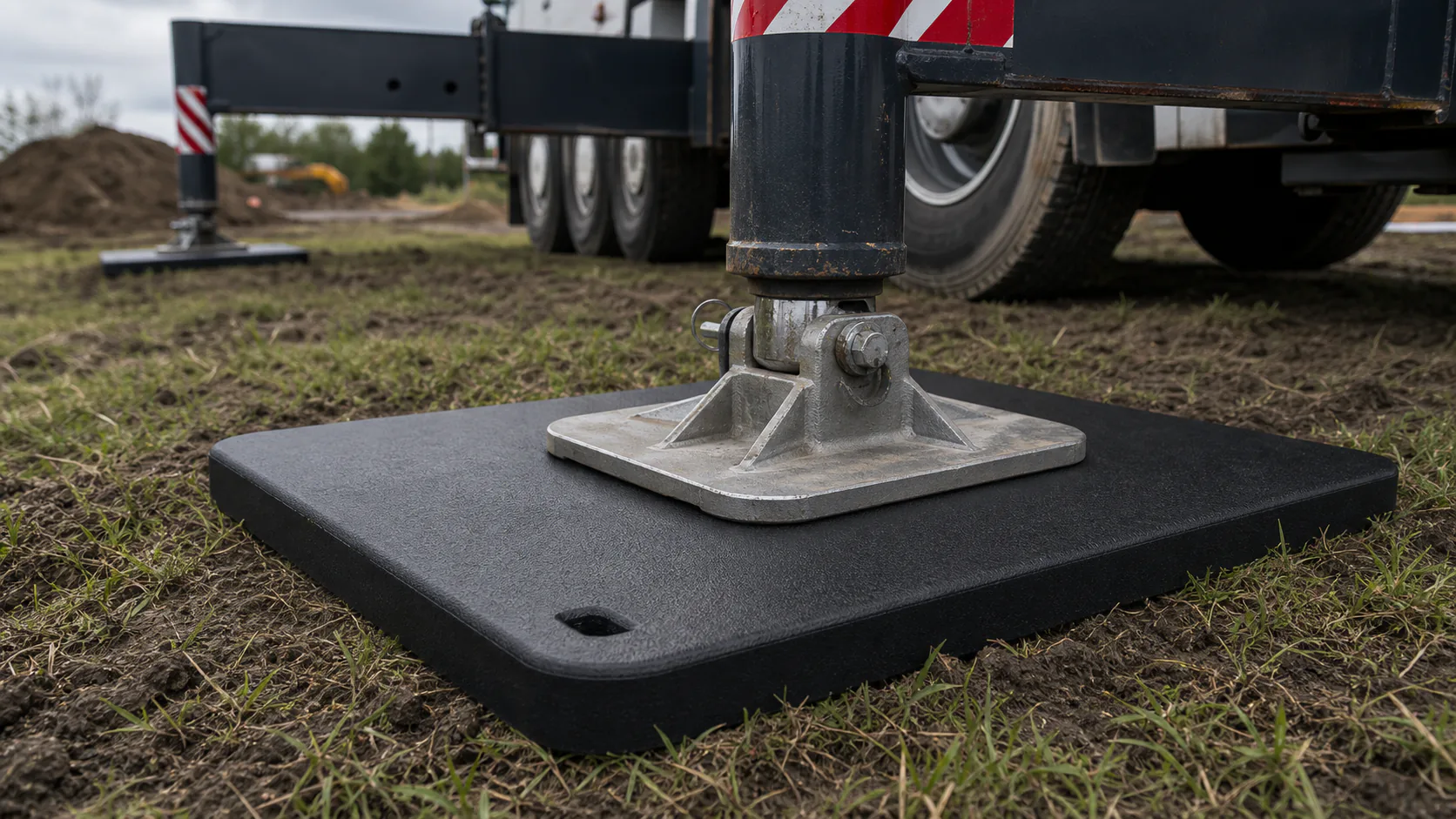
Crane outrigger pads

Pads enlarge the stabilizer contact area and separate the outrigger foot from finished or soft ground.

Product starting point Outrigger Pads sized from the equipment reaction force, foot area and supporting ground.

Why it helps

  • Helps distribute contact over a larger pad area.
  • Water-resistant and easier to handle than many steel alternatives.

Confirm before selection

  • No fixed load is assumed: verify reaction force and soil bearing.
  • Follow crane manufacturer instructions and competent lift planning.
08

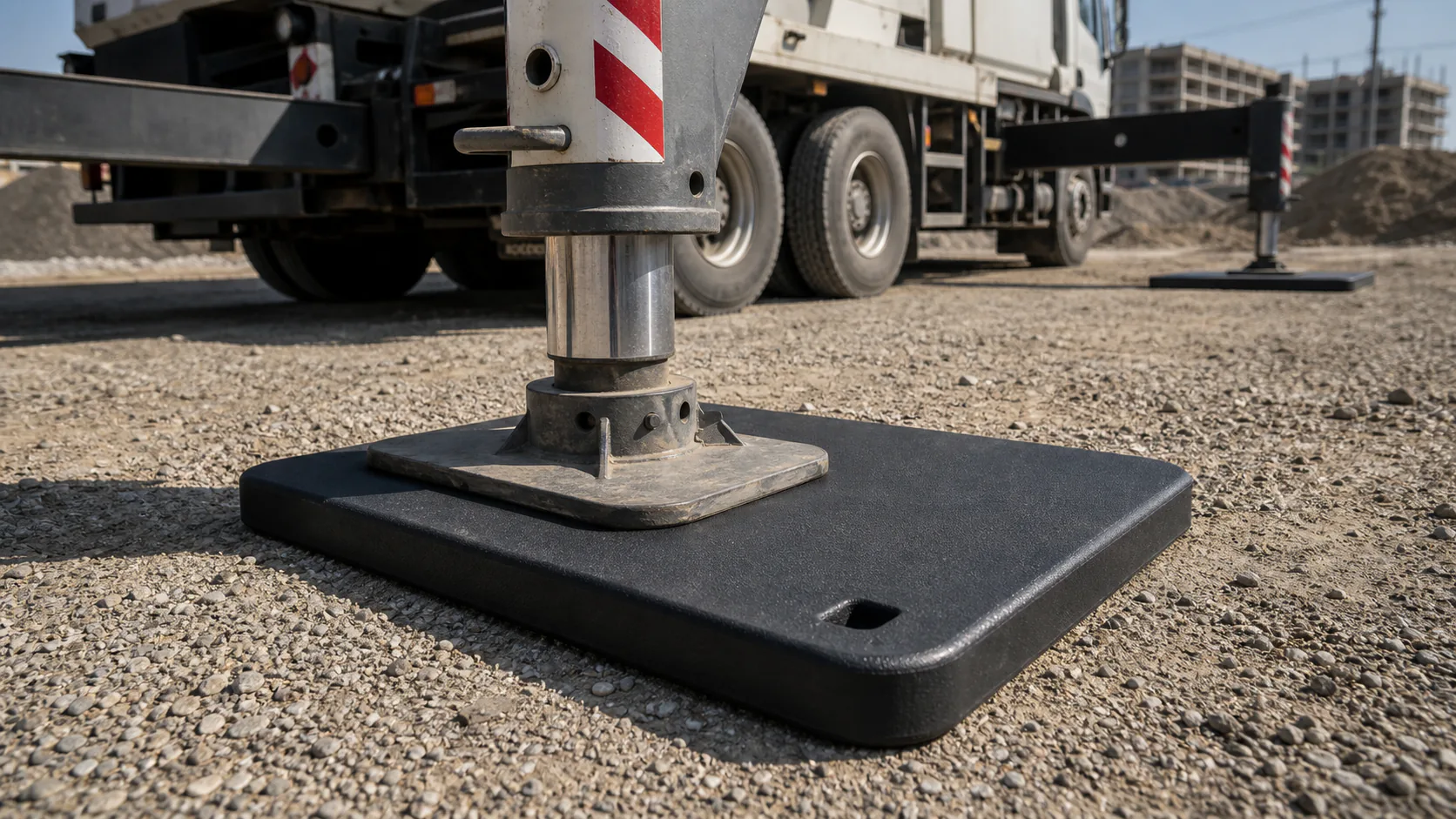
Pump truck & stabilizer support

Portable pads provide a defined bearing surface under concrete-pump and other stabilizer feet.

Product starting point Outrigger Pads selected for the stabilizer geometry and jobsite ground.

Why it helps

  • Protects the immediate surface beneath the support.
  • Custom cutting and handles can support site handling.

Confirm before selection

  • Confirm each stabilizer reaction and actual ground condition.
  • Check pad seating, slope, voids and movement throughout operation.

Low-friction truck & industrial liners

Smooth PE and UHMWPE surfaces used to reduce sticking, protect equipment and support bulk-material flow.

Low-friction truck & industrial liners
09

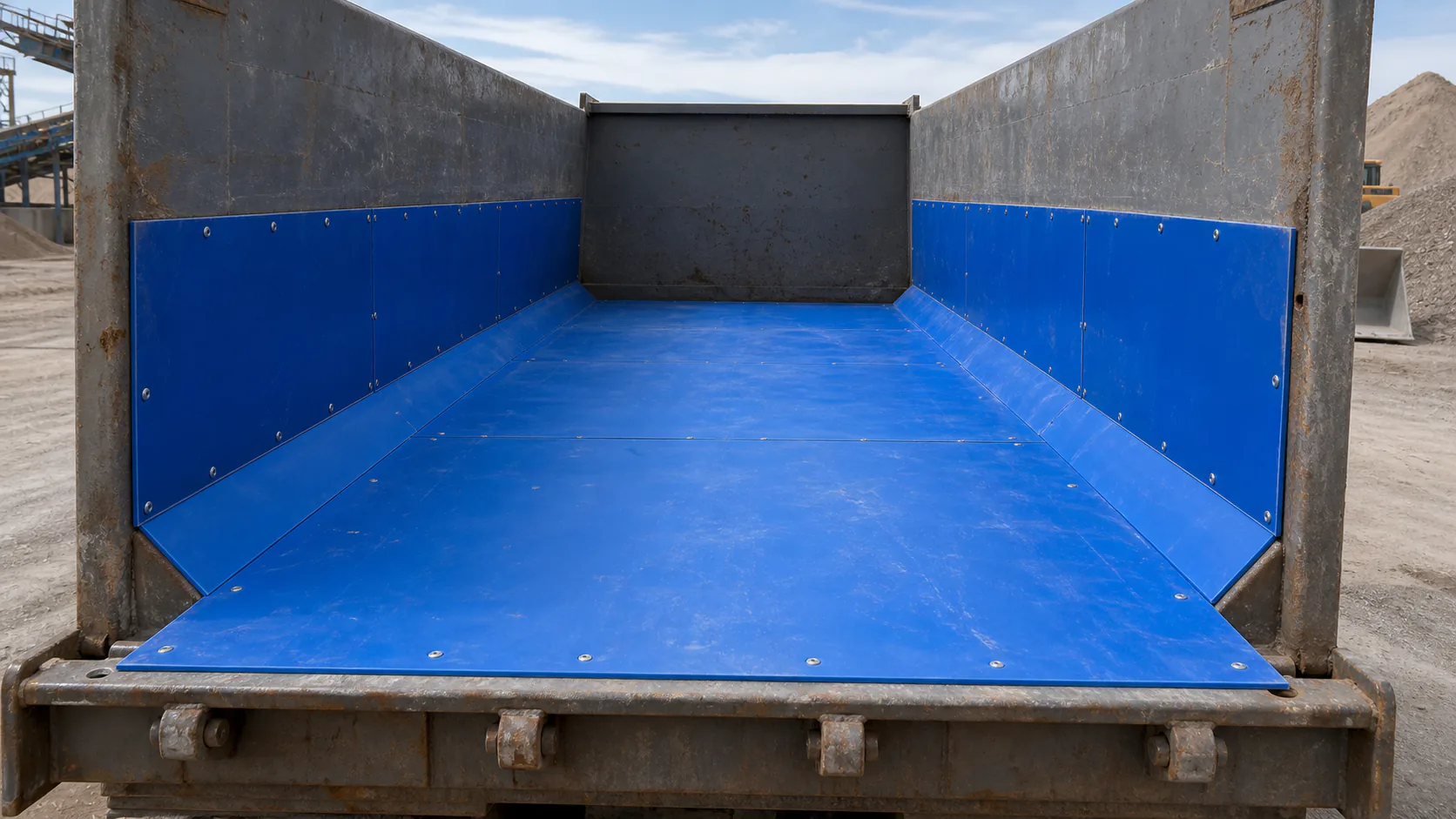
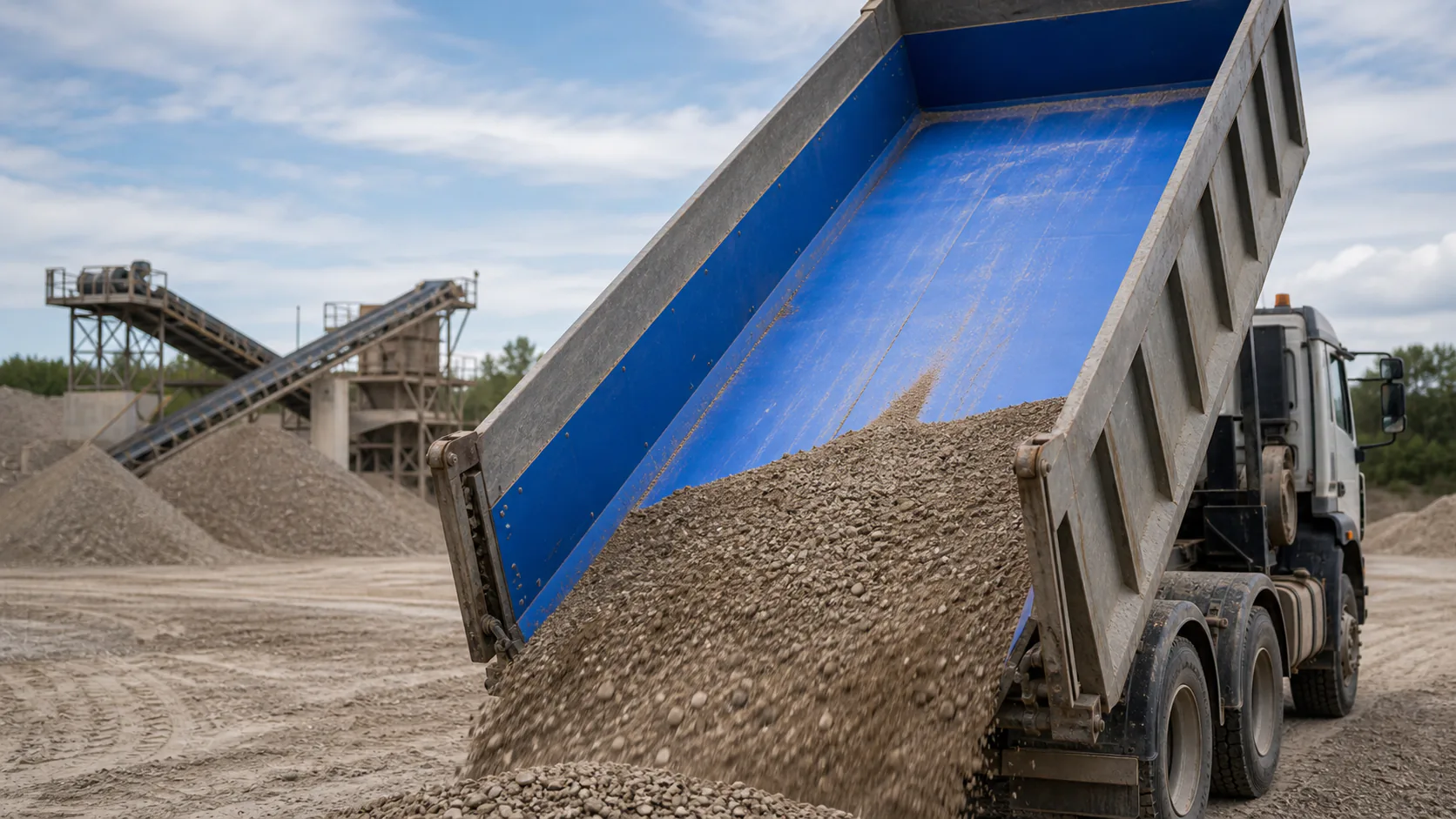
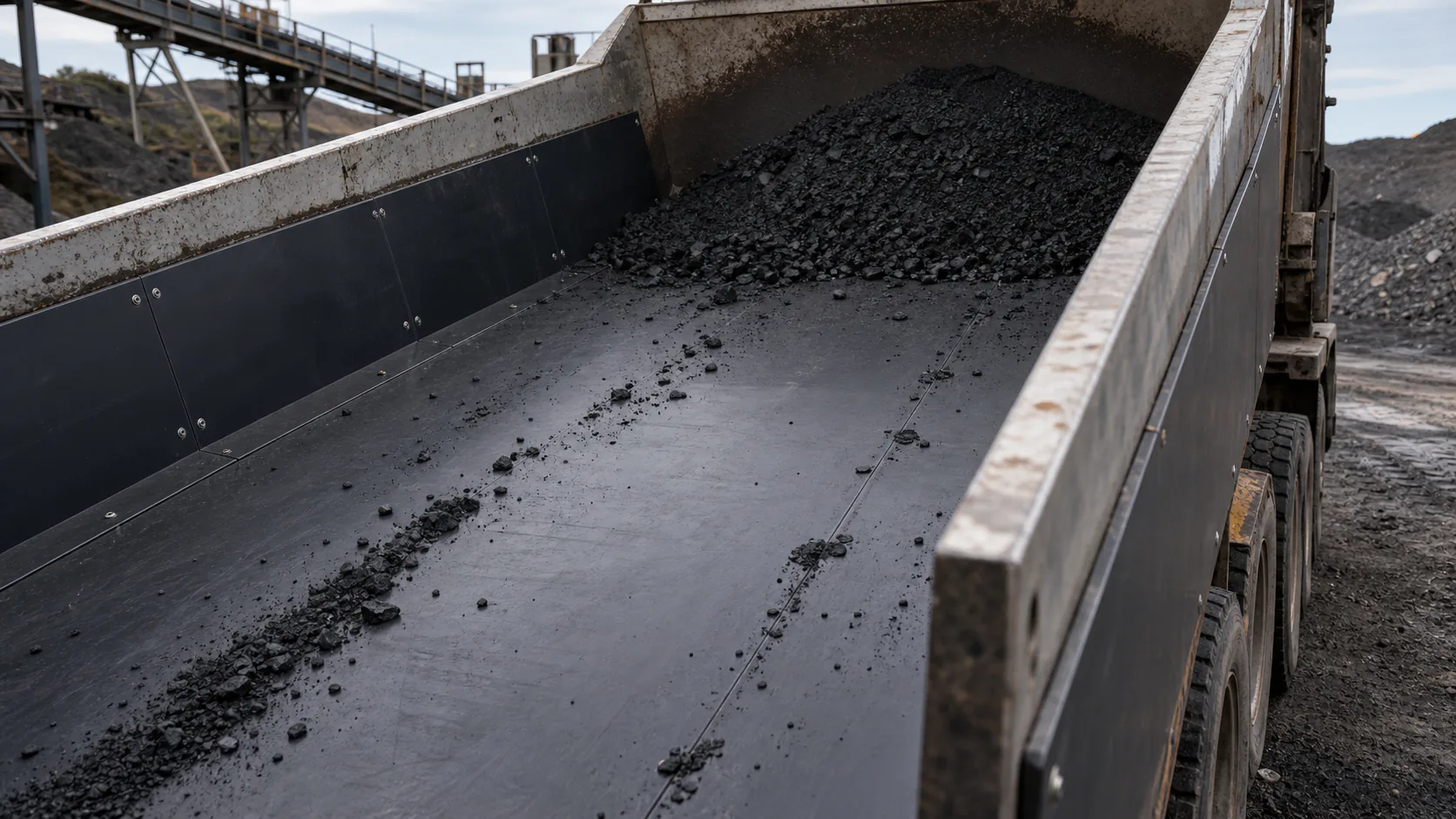
Dump-truck body liners

Smooth liners are installed in dump bodies carrying gravel, coal, mineral fines or wet bulk material to support discharge and protect the body.

Product starting point Smooth UHMWPE or suitable PE liner sheet with project-specific thickness and fastening.

Why it helps

  • Low-friction surface can reduce sticking and manual clean-out.
  • Wear liner separates abrasive cargo from the metal body.

Confirm before selection

  • Confirm material, temperature, moisture, abrasion and impact.
  • Engineer fastening, joints and thermal expansion for the body.
10

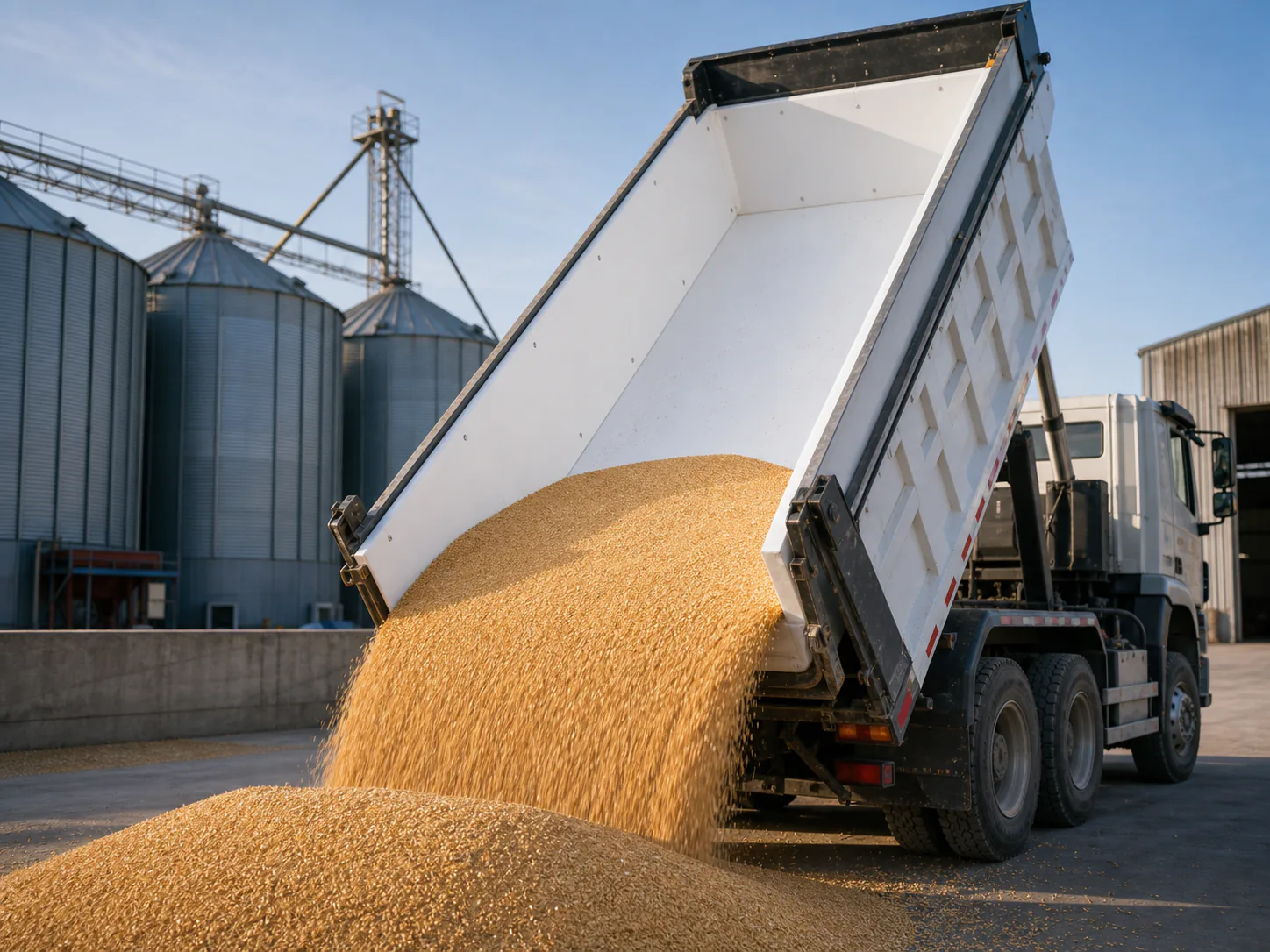
Grain transport truck liners

A smooth liner supports more consistent grain discharge from truck bodies and reduces material caught on worn internal surfaces.

Product starting point Virgin-material smooth liner where the project requires a controlled material grade.

Why it helps

  • Supports easier clean-out and material movement.
  • Protects the truck body from direct sliding wear.

Confirm before selection

  • Confirm food-contact and hygiene requirements for the destination market.
  • Review temperature, fastening, seams and cleaning procedure.
11

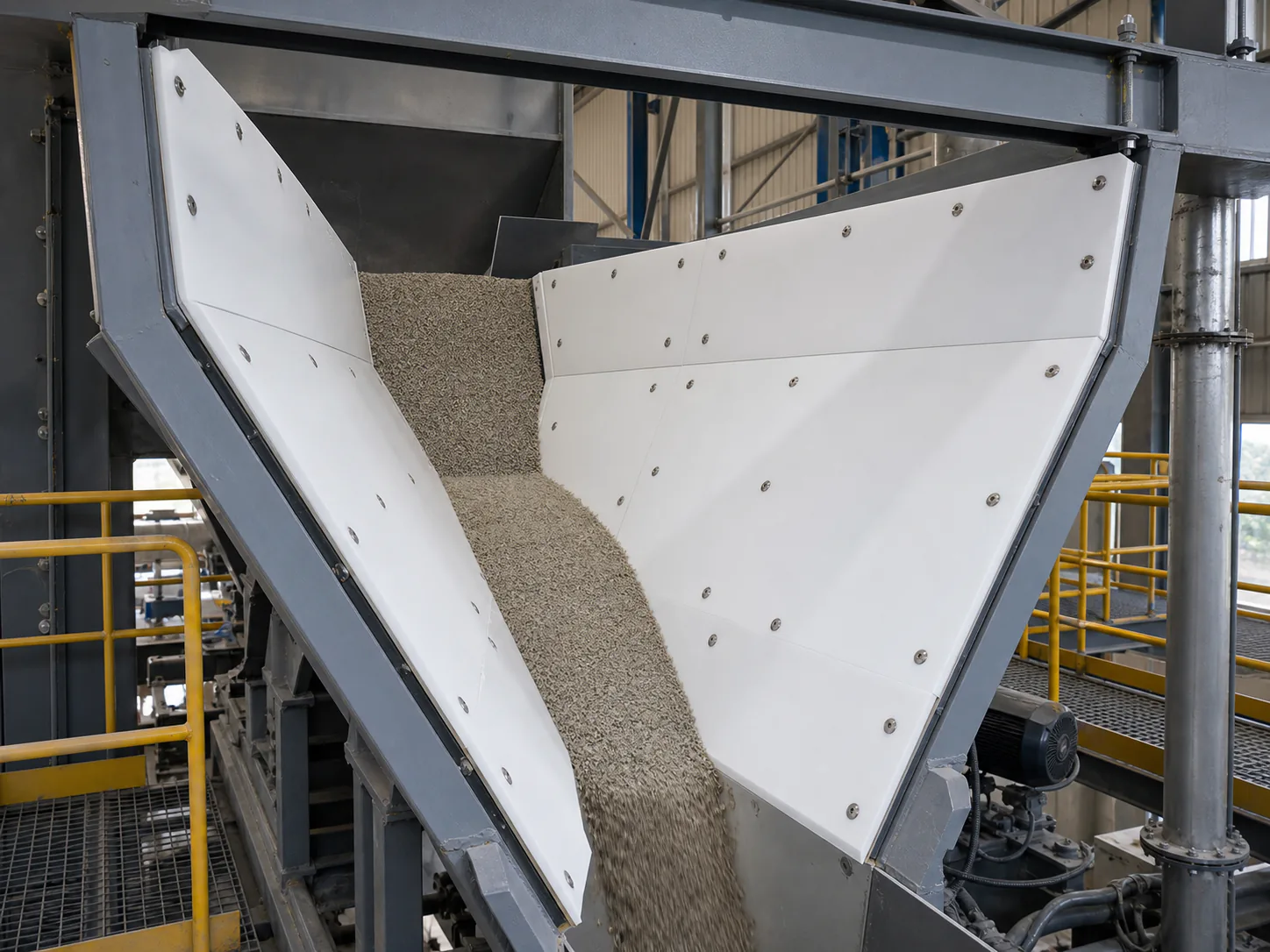
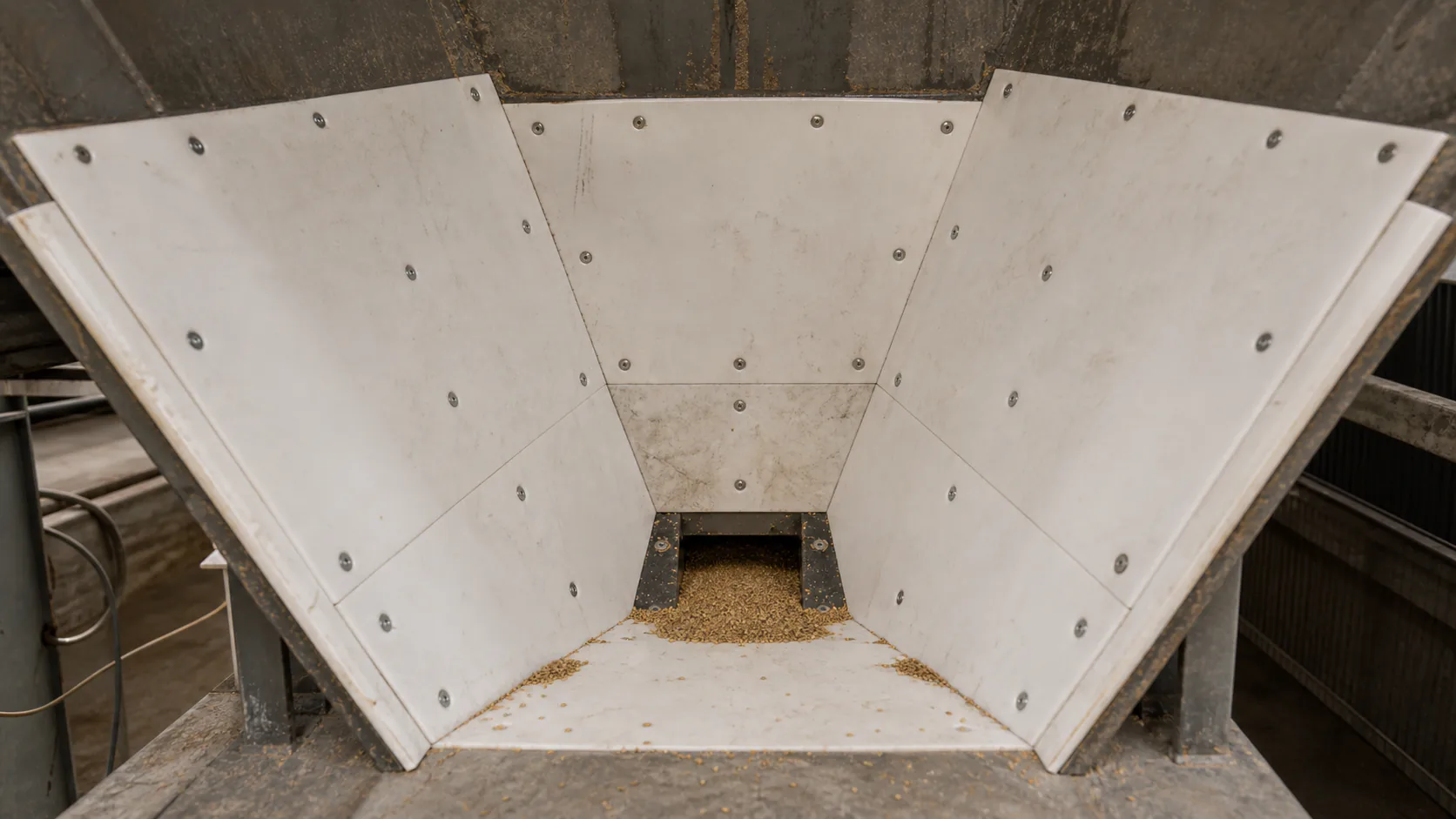
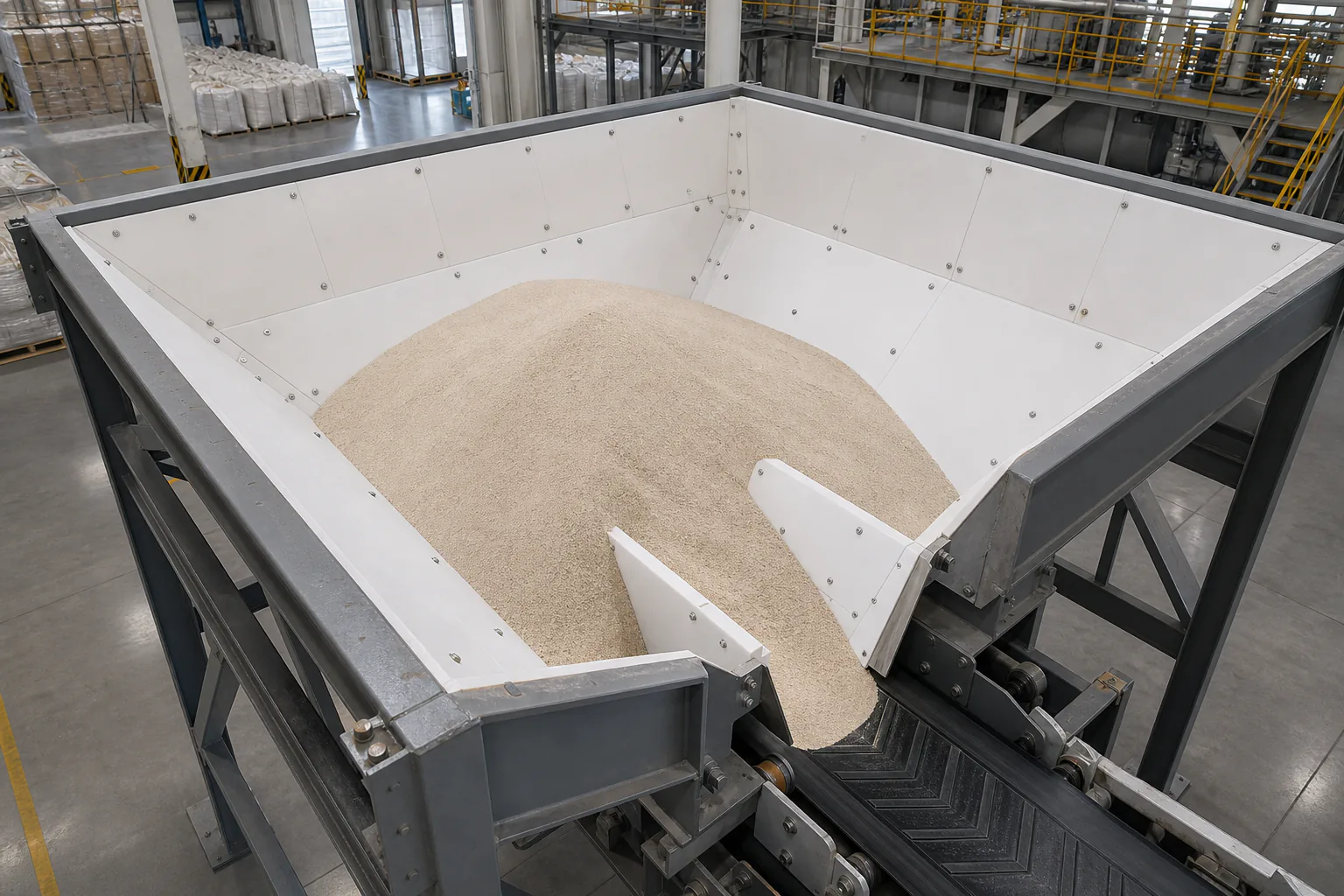
Grain bins, hoppers & outlets

Smooth white or black liners can be fitted to hopper walls and discharge outlets where bulk material tends to hang up.

Product starting point UHMWPE or suitable PE liner sheet selected for flow, wear and material-grade needs.

Why it helps

  • Reduces surface friction and localized buildup in suitable geometries.
  • Replaceable liner protects the underlying bin wall.

Confirm before selection

  • Confirm material behaviour, wall angle, moisture and temperature.
  • Design fasteners and joints so they do not obstruct the flow path.
12

Mineral chutes & bulk flow

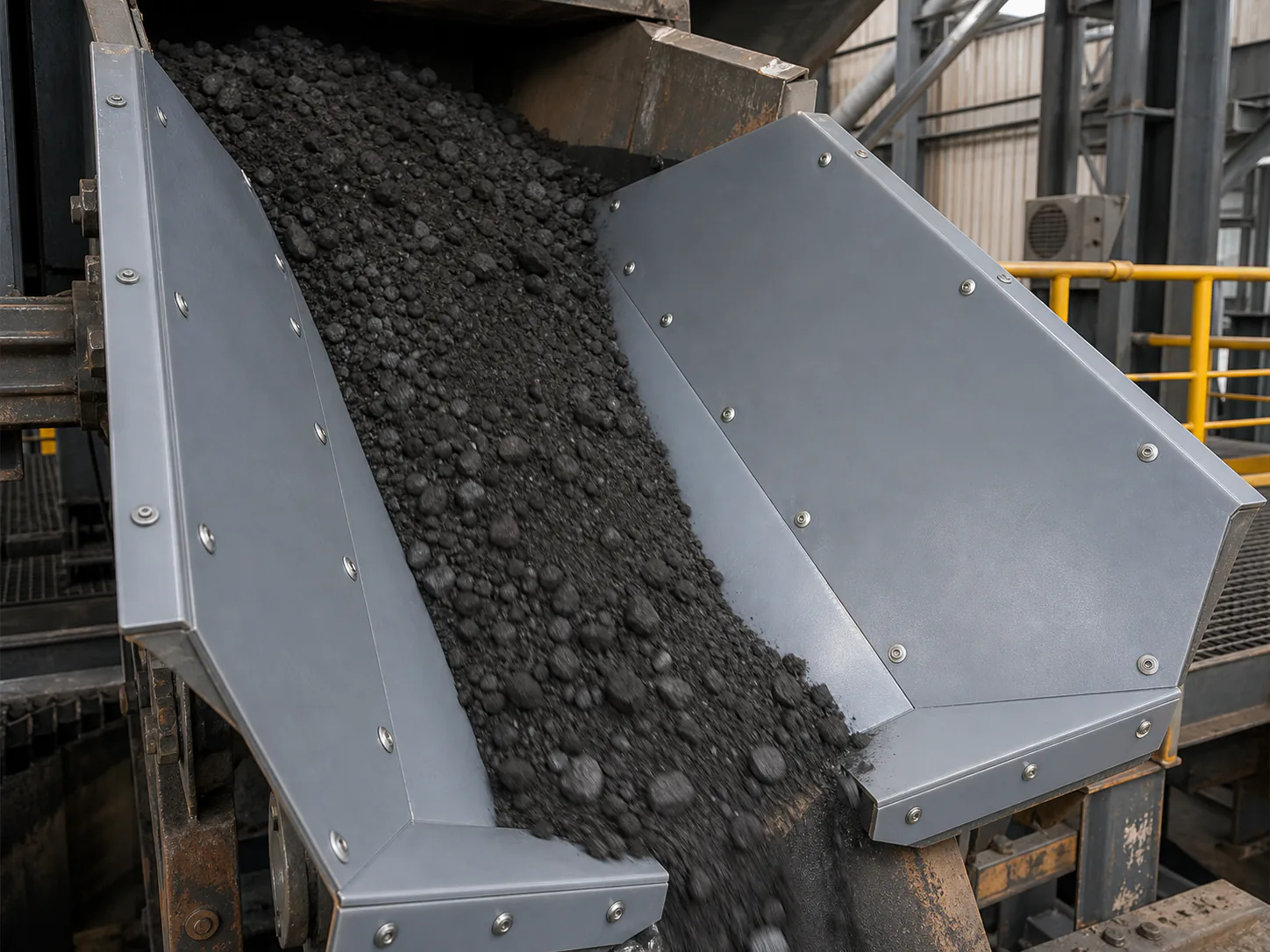
Wear-resistant polymer liners protect chute surfaces and may improve the flow of abrasive granular materials.

Product starting point UHMWPE wear liner with thickness and fixing pattern selected for the chute.

Why it helps

  • Separates abrasive flow from the steel chute.
  • Low-friction face can reduce adhesion for suitable materials.

Confirm before selection

  • Assess particle size, impact energy, temperature and abrasion rate.
  • Confirm expansion gaps, countersunk fasteners and replaceable sections.
13

Glass & raw-material bins

Low-friction liners can be used inside glass raw-material and other granular-material bins to protect walls and support discharge.

Product starting point Virgin or specified-grade UHMWPE/PE liner based on process requirements.

Why it helps

  • Smooth, corrosion-resistant internal surface.
  • Can be cut to bin geometry and outlet details.

Confirm before selection

  • Confirm contamination, static-control and material-grade requirements.
  • Review particle impact, temperature, seams and maintenance access.

Synthetic ice & special surfaces

Modular polymer skating surfaces for training and recreation without refrigeration.

Synthetic ice & special surfaces
14

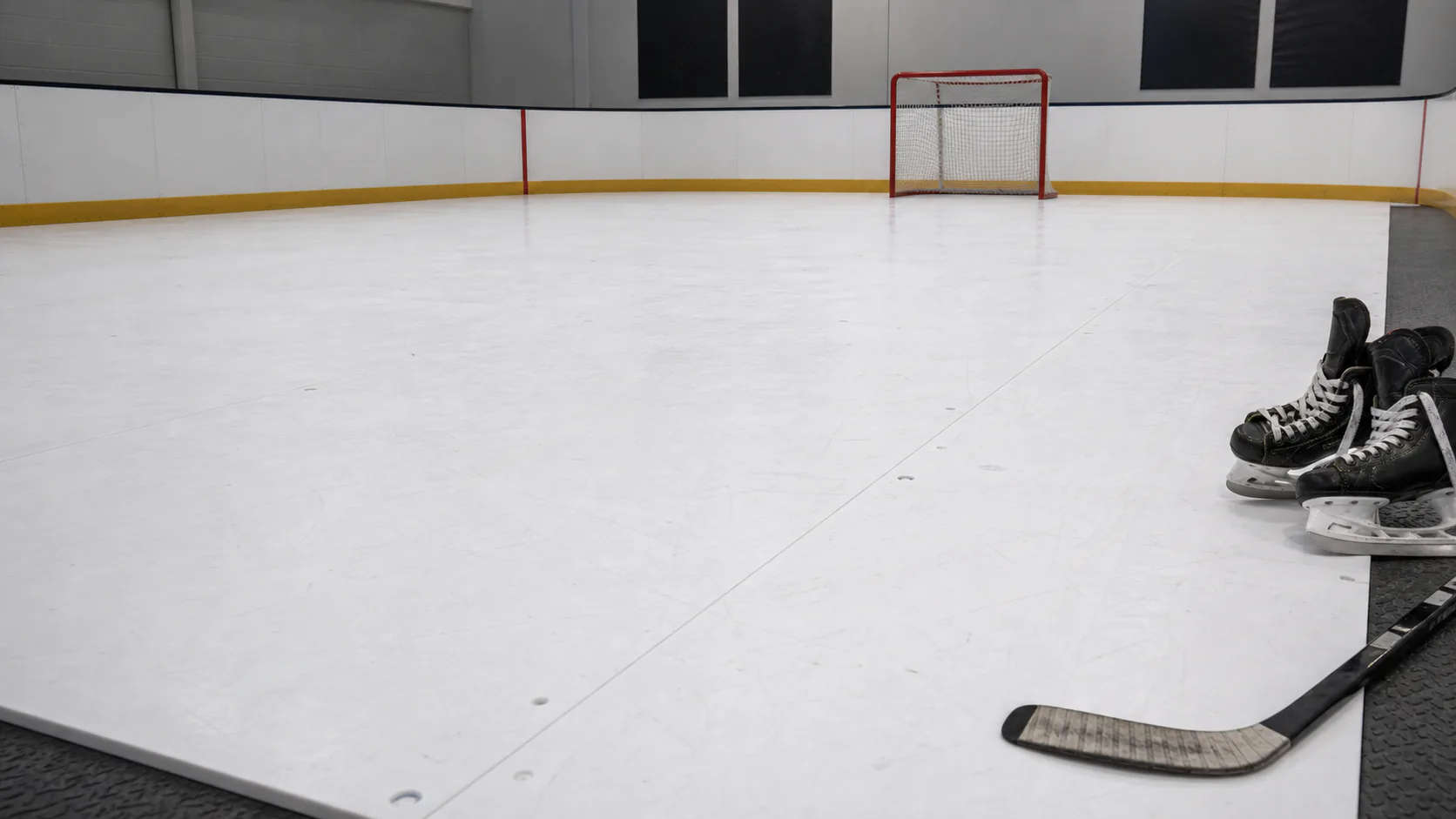
Synthetic ice training rinks

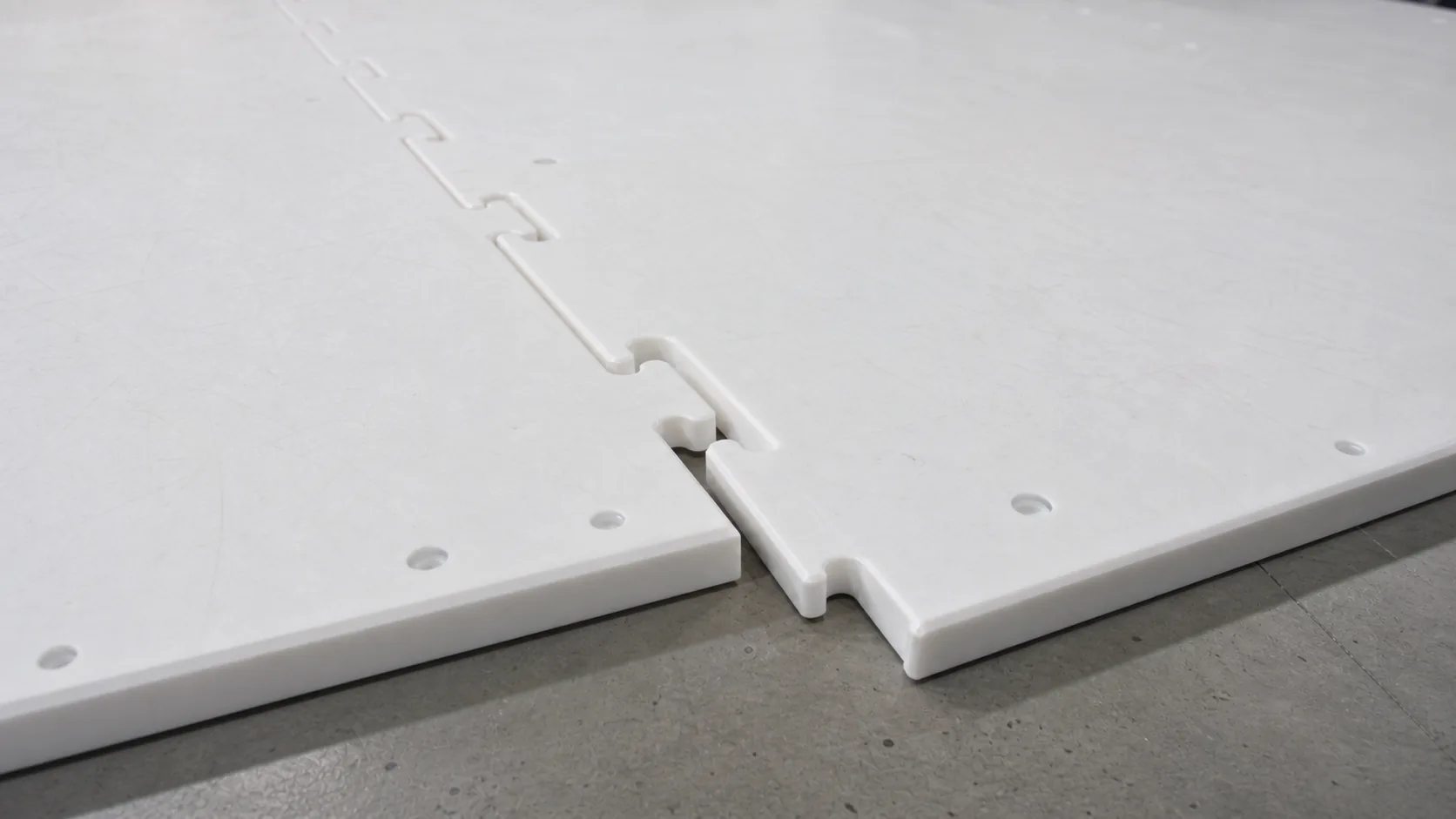
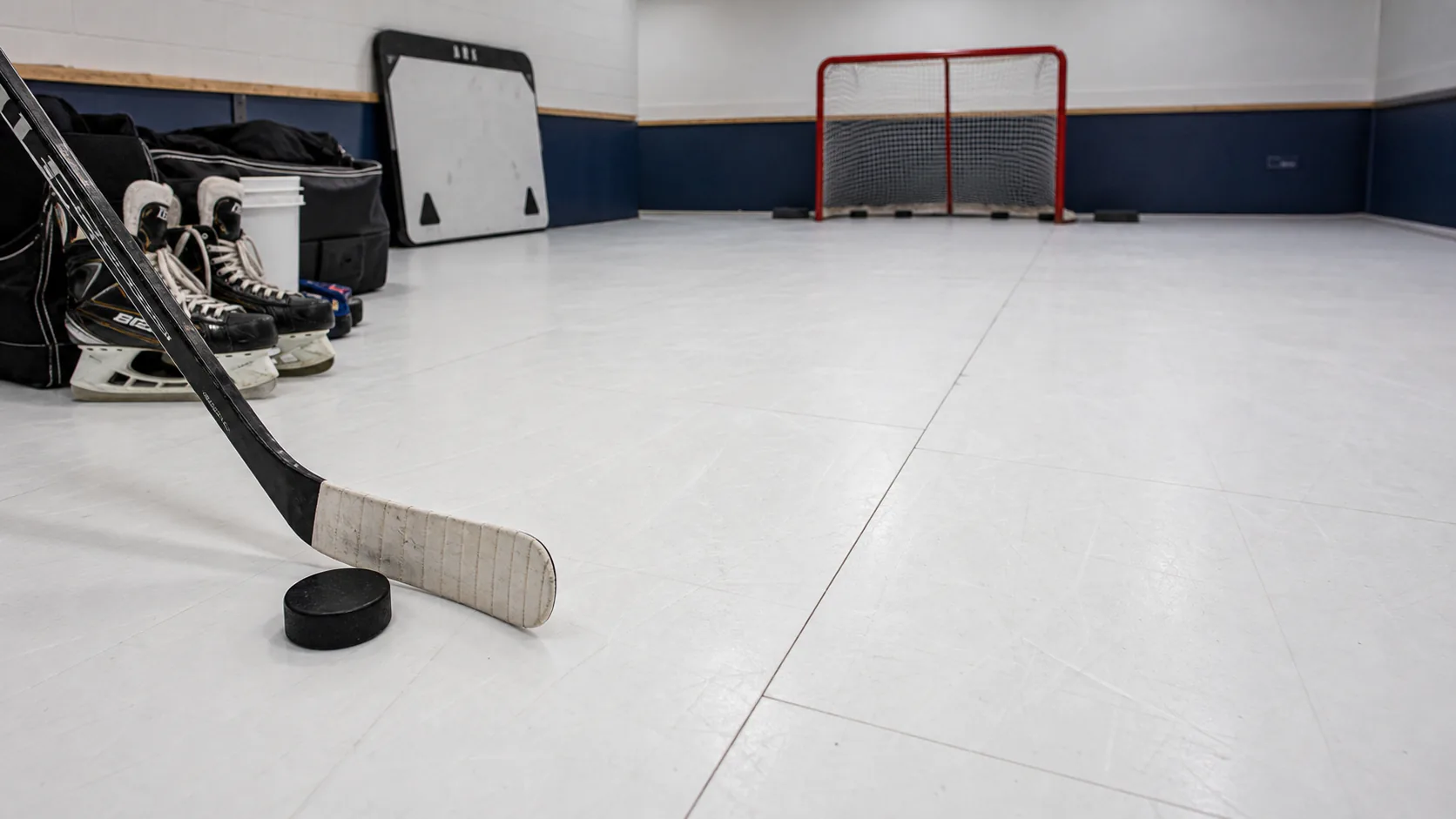
Interlocking polymer panels form a dry skating surface for indoor training or suitable all-season recreation areas.

Product starting point Synthetic Ice Panels installed over a flat, stable base.

Why it helps

  • No refrigeration or water-making system is required.
  • Modular panels can be configured for different spaces.

Confirm before selection

  • Glide differs from refrigerated ice.
  • Base flatness, seam finishing, cleaning and blade condition affect use.
15

Hockey & skating practice

Synthetic ice supports hockey drills and skating practice where access to refrigerated ice is limited.

Product starting point Synthetic Ice Panels with joint layout and thickness selected for the venue.

Why it helps

  • Enables repeat practice in suitable indoor or outdoor conditions.
  • Modular areas can be expanded or repaired by section.

Confirm before selection

  • Confirm user level, training intensity and venue rules.
  • Plan blade care, debris removal and periodic seam inspection.

How the project is narrowed.

  1. Describe the ground and route
  2. Share vehicle or equipment information
  3. Confirm dimensions and quantity
  4. Review format, handling and supply details

Public load guarantees are not stated without the relevant setup, ground conditions and supporting documentation. Send the real operating conditions for review.

Send an application brief