
Support material release
A smooth contact surface can help reduce sticking for suitable bulk materials and discharge geometries.
Bulk-material flow & wear protection
Smooth UHMW-PE liner surfaces can help reduce material sticking, support bulk-material discharge and separate abrasive material from steel surfaces. Material grade, thickness, fastening and joint design should be selected for the material handled, equipment geometry and operating conditions.
Request a liner project quote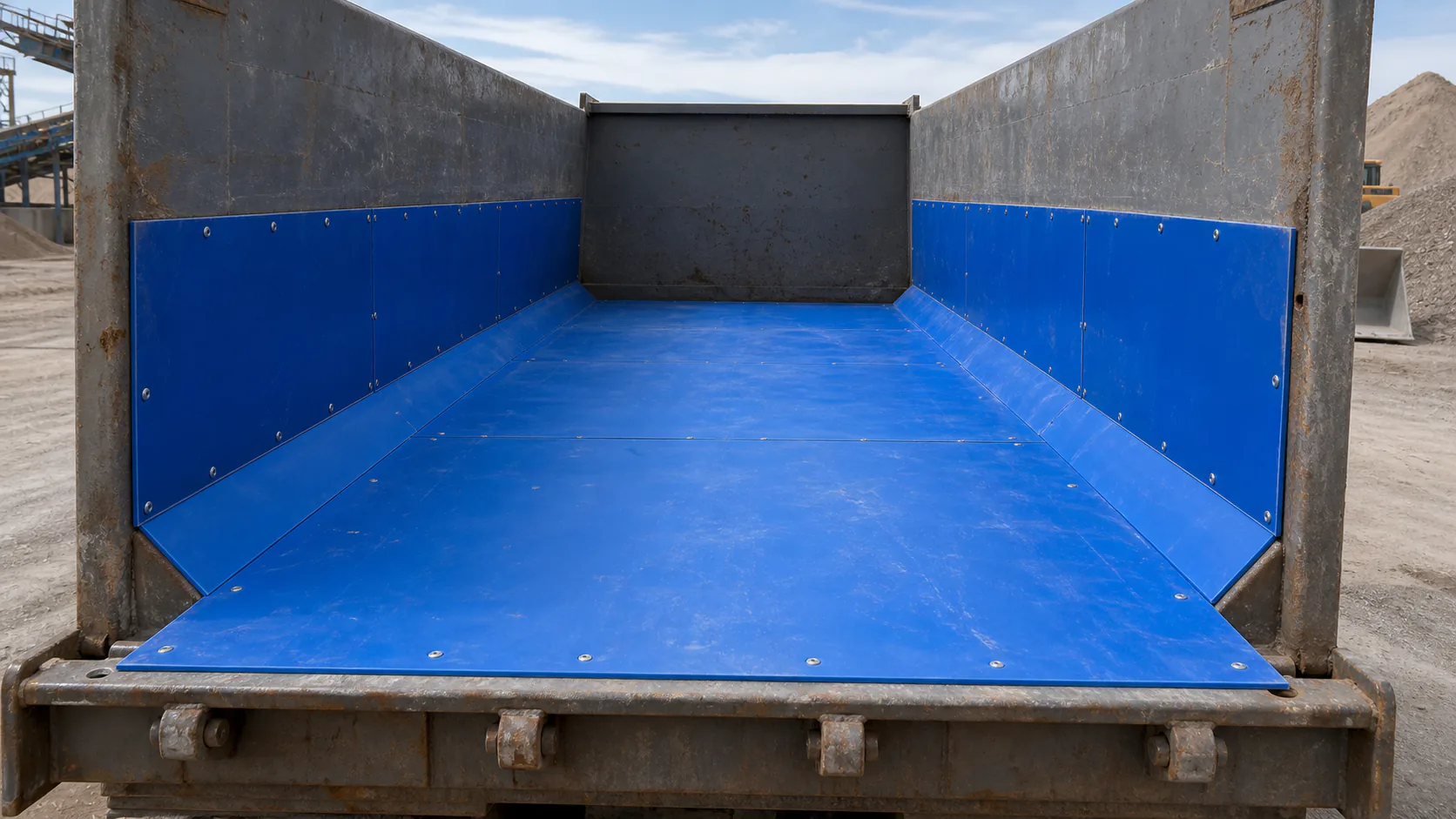
Bulk-material flow & wear protection
A UHMW-PE (also written UHMWPE) truck liner is a smooth, replaceable ultra-high-molecular-weight polyethylene surface installed over selected steel floor and wall areas in a dump truck, trailer, hopper or chute. In a suitable application, it can help material release and separate sliding wear from the steel structure.
TERRADON reviews the handled material, equipment geometry and operating conditions before confirming a liner specification.
A smooth contact surface can help reduce sticking for suitable bulk materials and discharge geometries.
A replaceable polymer liner separates sliding abrasive material from the underlying steel surface.
Thickness, seams, fasteners and expansion allowances are reviewed for the actual body, hopper or chute.
Application fit
The source document distinguishes frequent sliding wear and sticking from sharp, concentrated or high-drop impact. That distinction should be reviewed before a liner is specified.
Steel, local reinforcement or a hybrid lining may be the safer answer in severe piercing-impact zones.
Application gallery
These visuals show typical application configurations. They are not customer case records, performance tests or evidence of a specific material grade.
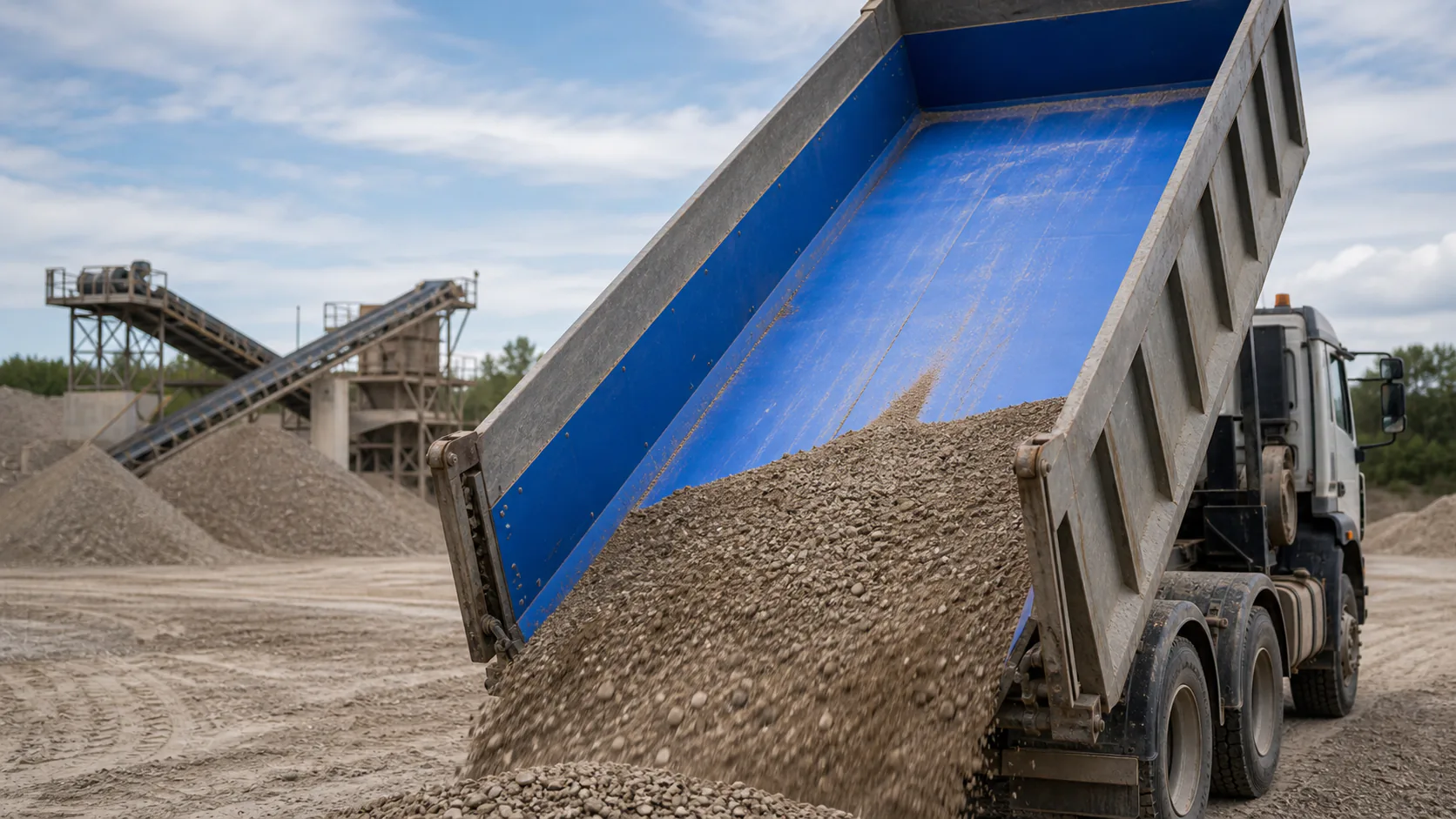
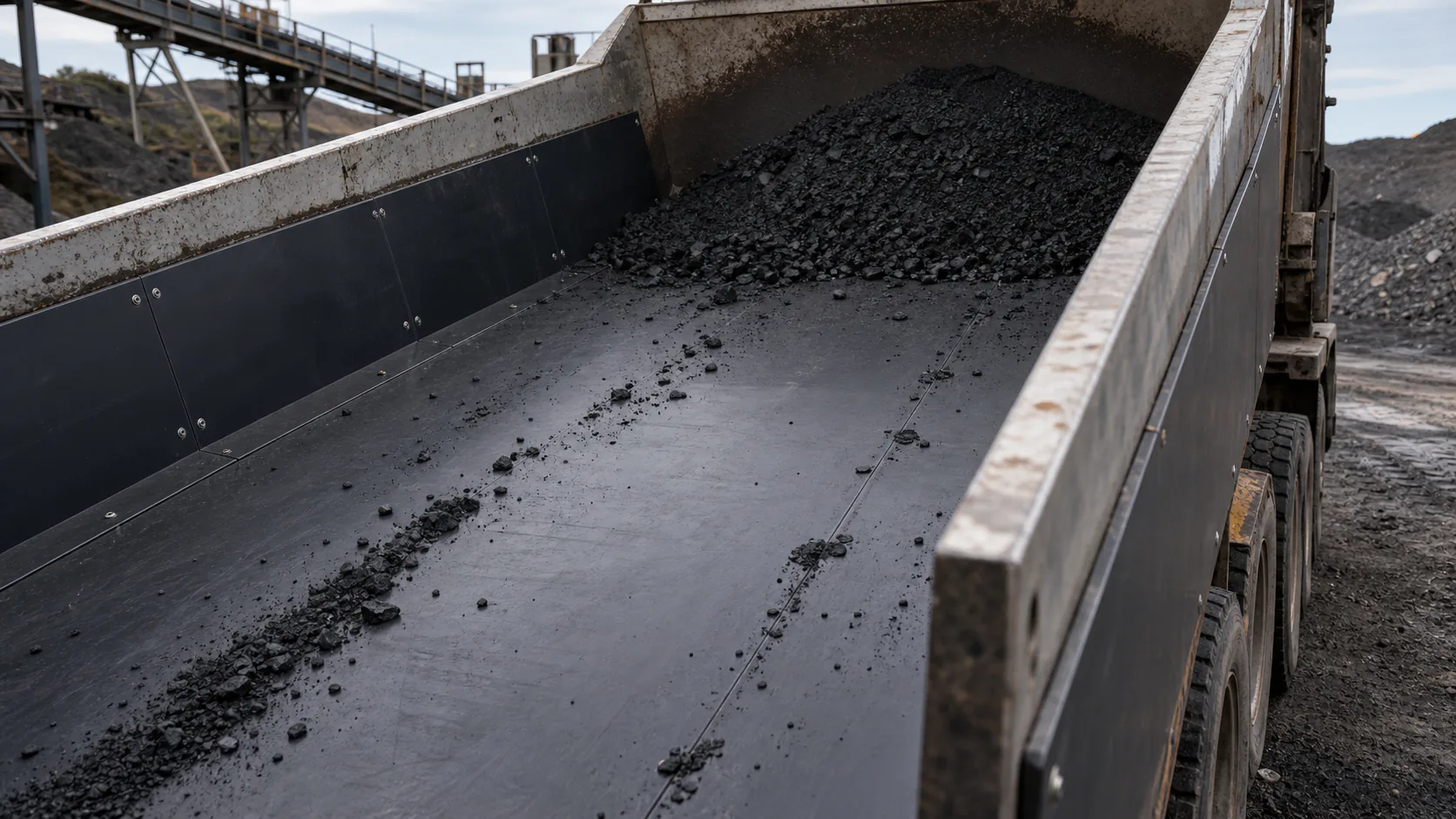
Smooth liners are installed in dump bodies carrying gravel, coal, mineral fines or wet bulk material to support discharge and protect the body.
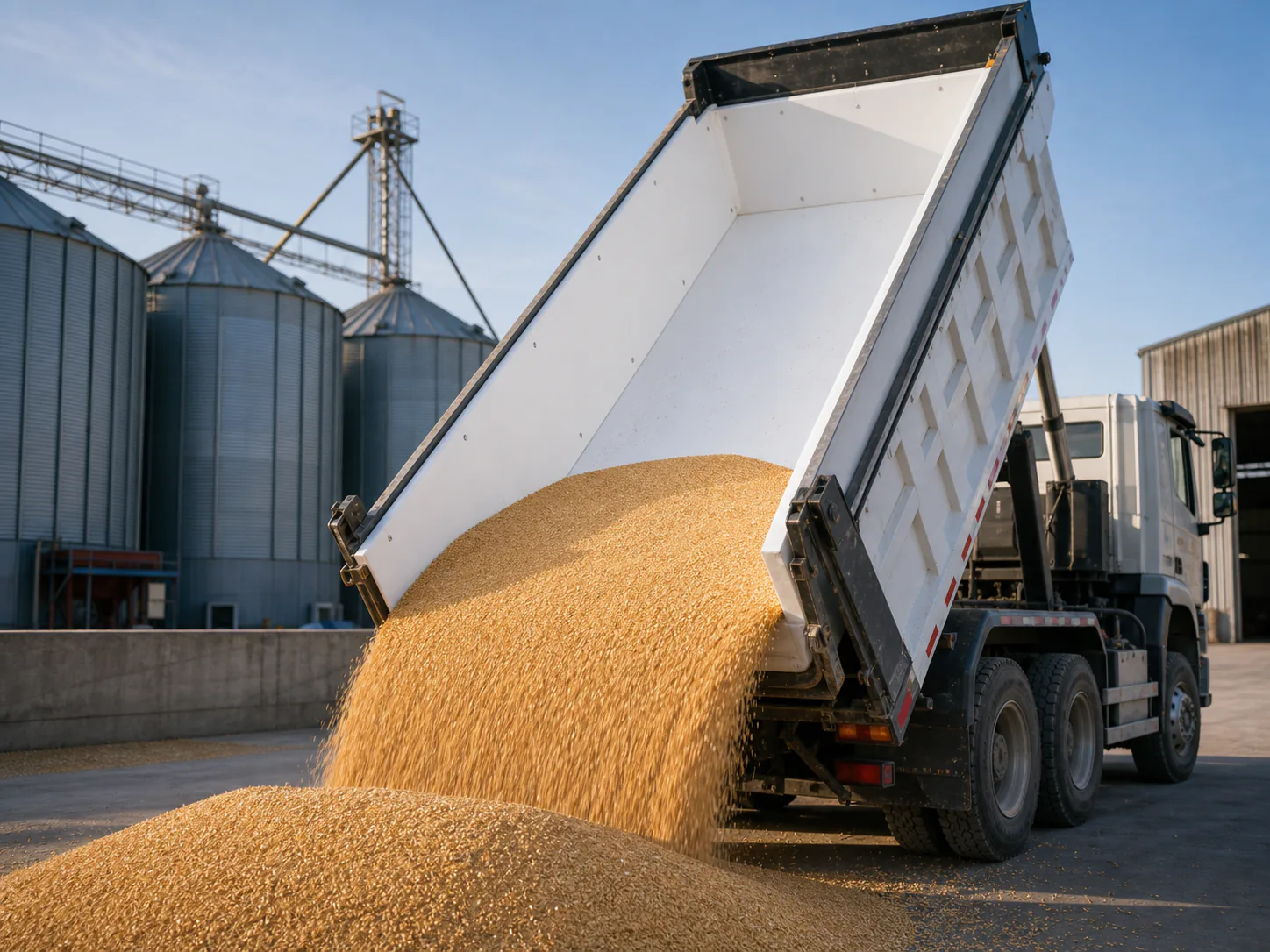
A smooth liner supports more consistent grain discharge from truck bodies and reduces material caught on worn internal surfaces.
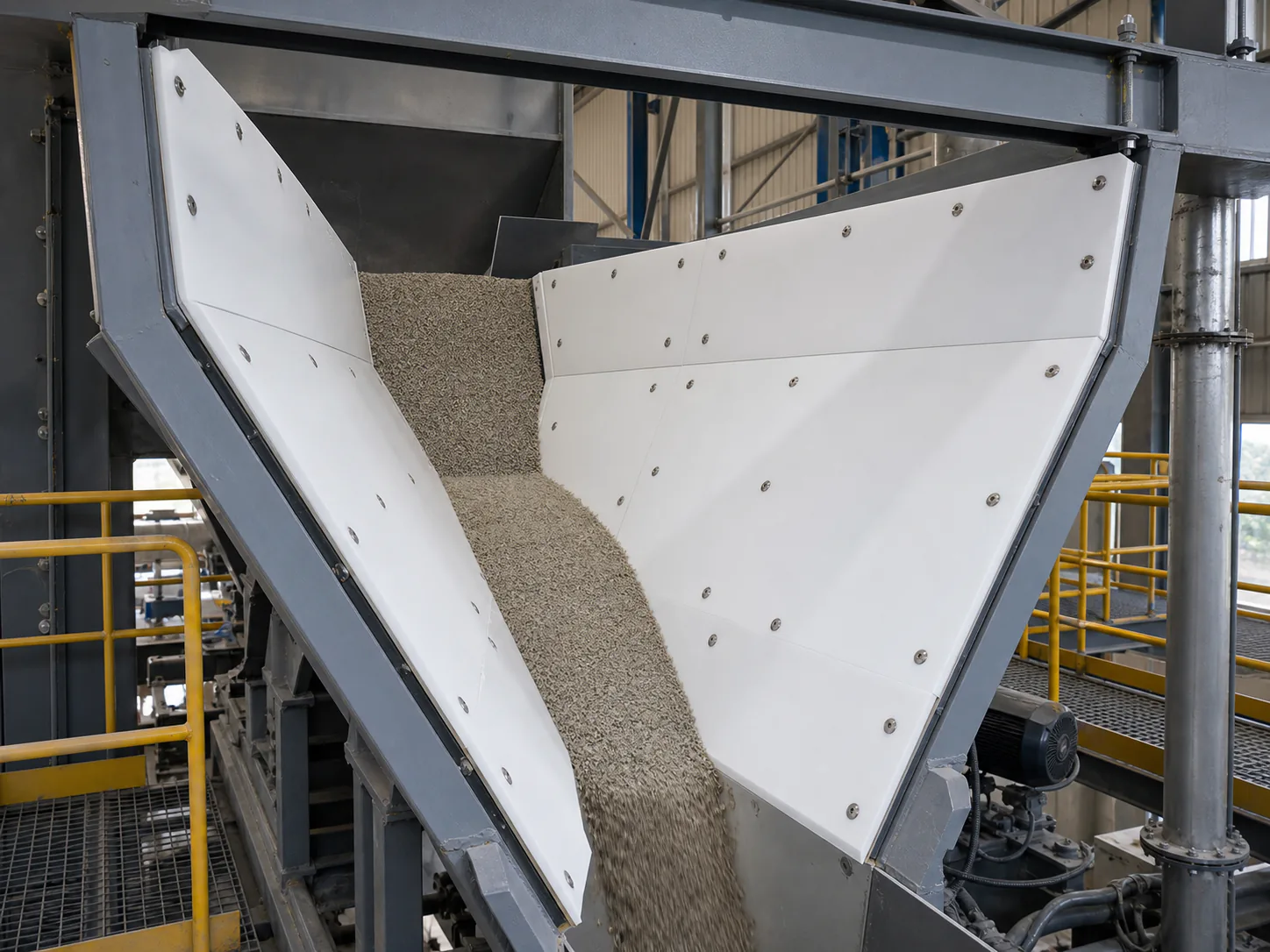
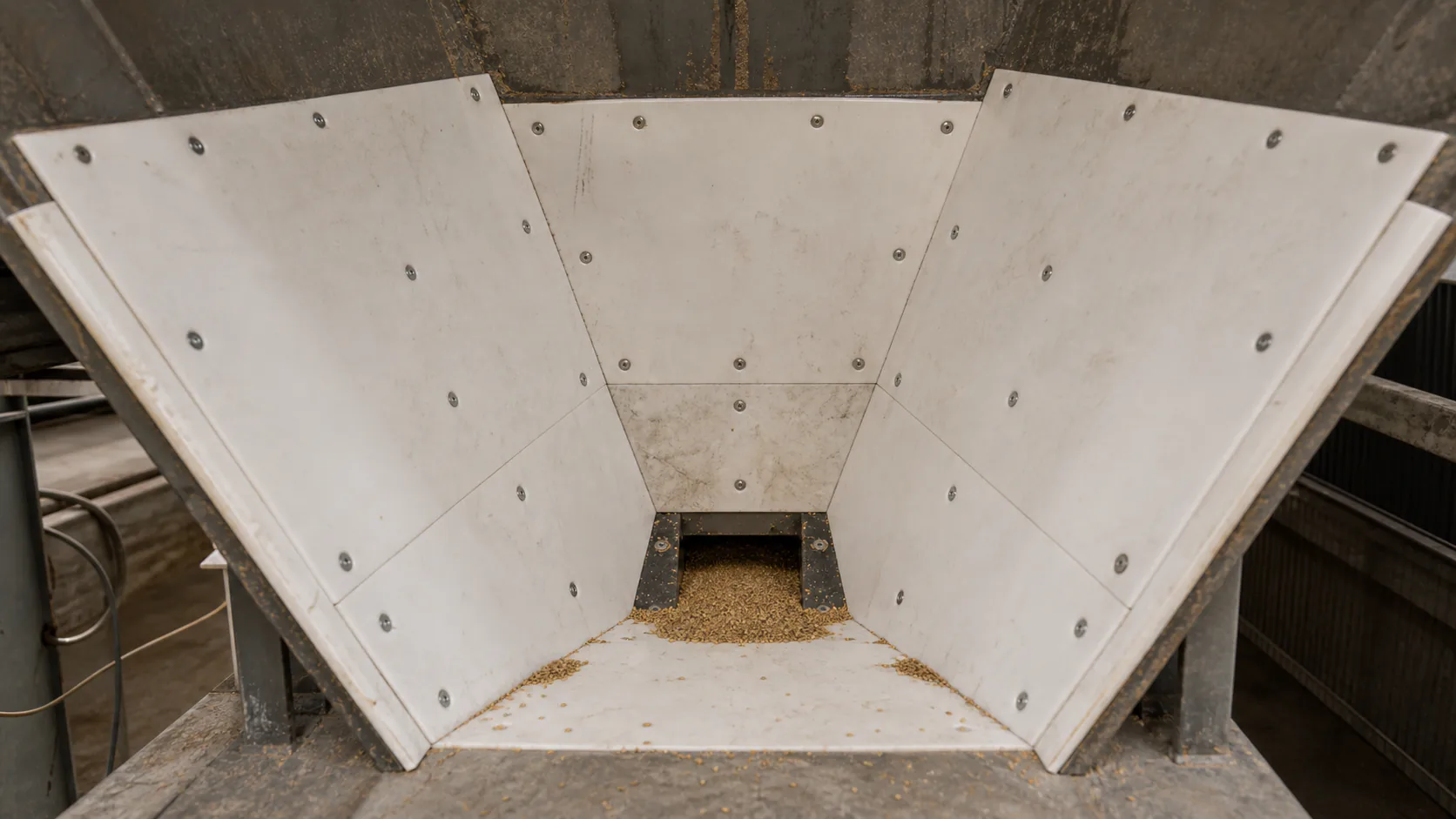
Smooth white or black liners can be fitted to hopper walls and discharge outlets where bulk material tends to hang up.
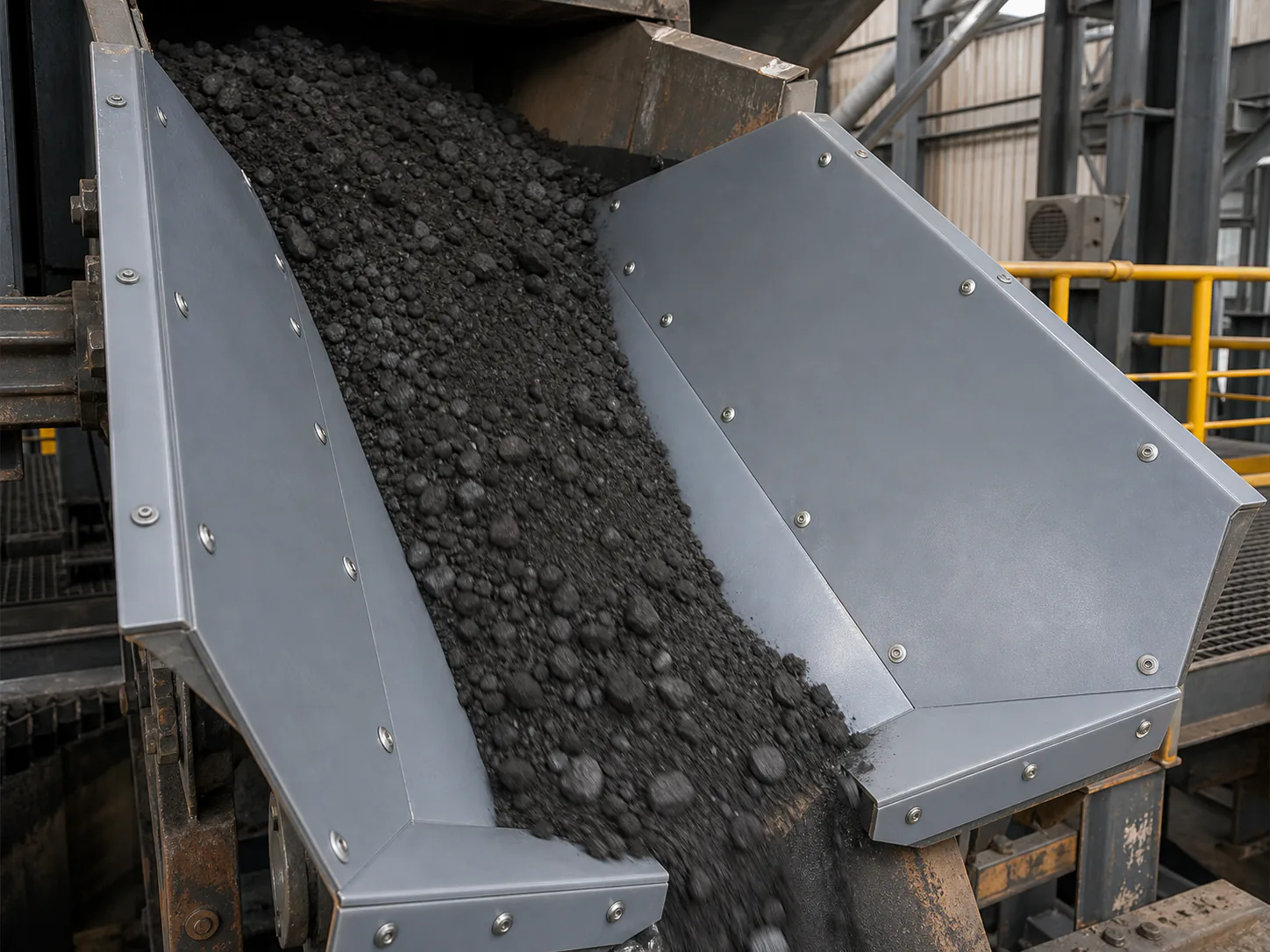
Wear-resistant polymer liners protect chute surfaces and may improve the flow of abrasive granular materials.
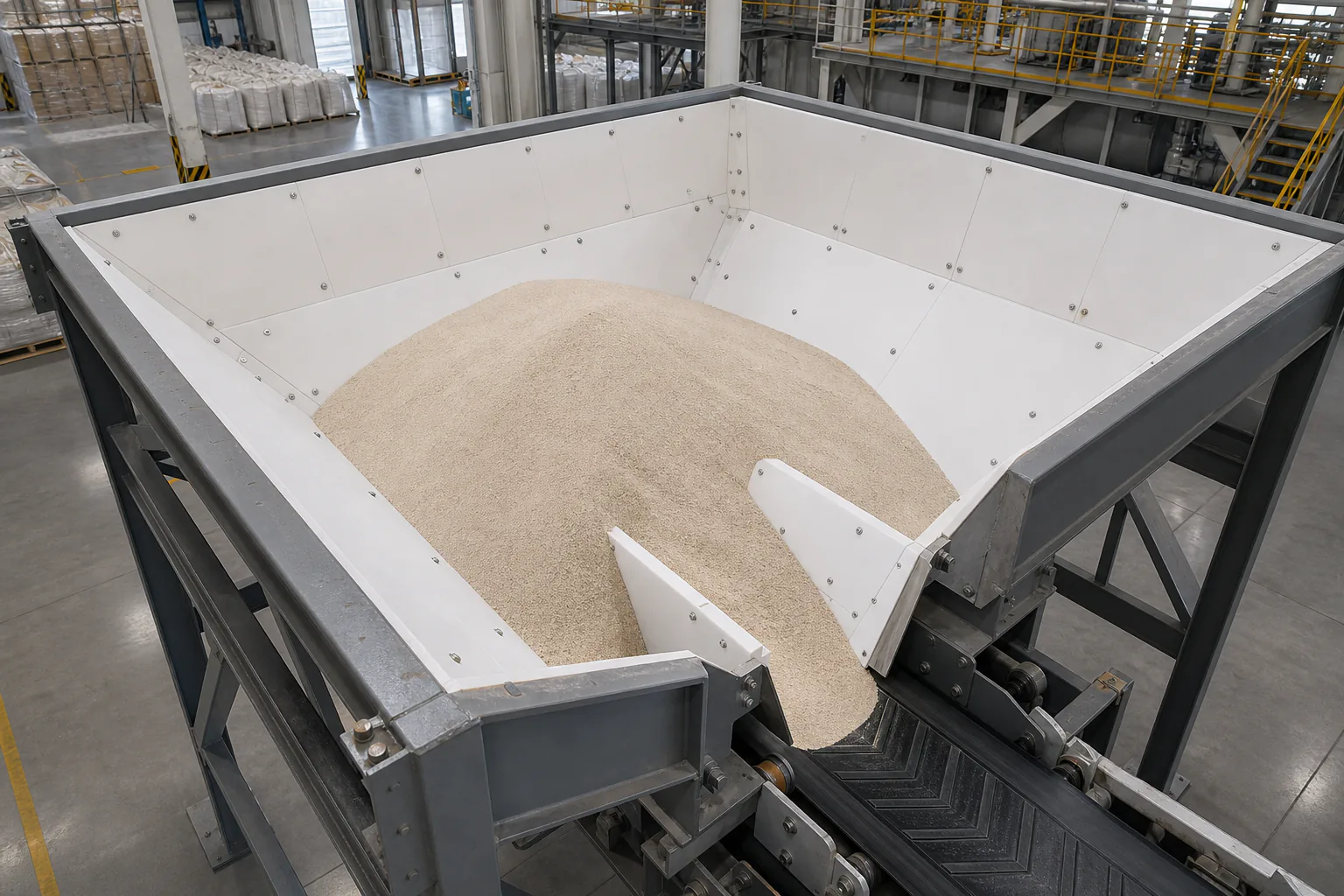
Low-friction liners can be used inside glass raw-material and other granular-material bins to protect walls and support discharge.
Selection inputs
The following details help define the material grade, thickness, fixing pattern and joint layout for technical review.
Measurement & installation planning
A liner installation needs a checked substrate, coverage plan, seams, fixings and thermal-expansion allowance. Confirm these before cutting or drilling.
Buyer questions
No. A smooth, low-friction surface can help suitable materials release, but moisture, temperature, wall angle, surface geometry and material behaviour still affect discharge.
Thickness is reviewed with abrasion, impact, substrate support, equipment geometry, fastening and the planned replacement cycle. A single thickness is not right for every body or chute.
No. Large sharp loads, piercing impact, high-drop loading and concentrated pressure may require steel, local reinforcement or a hybrid design.
Send the material handled, equipment drawings or dimensions, loading and discharge method, temperature, moisture, quantity, destination and any grade or compliance requirement.
No. Treat food-contact, hygiene and static-control needs as project requirements. The selected grade and supporting documents must be confirmed before supply.
Send photographs and a dimensioned sketch of the steel floor, walls, front section and tailgate, plus the old liner thickness, fixing positions and worn areas. Describe the handled material and loading method. Measure the equipment itself; copying a damaged liner can repeat gaps or worn dimensions. Final cutting and fixing details need an approved drawing.
State whether you need full sheets or a project-cut layout, then provide the required grade if known, dimensions, thickness, quantity and delivery country or postcode. If the grade is unknown, describe the material and operating temperature. Ask for product, cutting, packing and freight to be identified in the quote; delivery terms, duties and taxes must be confirmed.
Specification boundary
TERRADON does not state a fixed load capacity, service life, warranty, certification, food-contact compliance, anti-static performance or material grade without matching project documents or test evidence.
Review manufacturing, processing and export-packing evidence